Top Attractions in Lisbon: 15 Must-Sees
The top attractions in Lisbon: São Jorge Castle, Belém Tower, Jerónimos Monastery, Alfama, Tram 28, the Oceanarium and more, with tips by area.
November 9, 2023 • 8 min read
Top Attractions in Lisbon: 15 Must-Sees
Lisbon's Top Attractions at a Glance
Baixa and Chiado
1. Praça do Comércio and the Rua Augusta Arch
Lisbon's grand riverside square was rebuilt after the 1755 earthquake, when the whole Baixa district was laid out in a new grid of streets. At its north side, the triumphal Rua Augusta Arch opens onto the pedestrian Rua Augusta. You can climb to a viewing terrace at the top of the arch for a view over the square, the river and the Baixa.

2. Santa Justa Lift
This 45-meter iron lift, designed by Raoul Mesnier du Ponsard and in service since 1902, links the streets of the Baixa with Largo do Carmo above. The lookout at the top looks over São Jorge Castle, the river and the Baixa. Lines for the lift can be long, so if you only want the view, walk up through Chiado to Largo do Carmo and reach the top platform from there.

3. Carmo Convent
Founded in 1389, the convent's church lost its roof in the 1755 earthquake and was never rebuilt. Today its open Gothic arches stand against the sky, and the ruins house the Carmo Archaeological Museum. It is one of the most striking reminders in the city of the earthquake.

4. Chiado and Bairro Alto
Chiado, just above the Baixa, is Lisbon's elegant shopping and café district, with historic bookshops and theaters. Next to it, Bairro Alto is quiet by day and the city's busiest nightlife area after dark. Walk on to the Miradouro de São Pedro de Alcântara for a view across to the castle.
Alfama and the Castle Hill
5. São Jorge Castle
On the highest hill in the historic center, São Jorge Castle has walls built by the Moors in the 10th century, taken by Afonso Henriques in 1147, and it was a royal palace from the 13th century. Walk the walls and towers for some of the best views in Lisbon, and see the city through the camera obscura in the Tower of Ulysses. Go early or late in the day to avoid the longest lines.

6. Lisbon Cathedral (Sé)
Built from 1147, soon after the city was taken from the Moors, the Sé is the oldest church in Lisbon. Its fortress-like Romanesque front is a mix of styles inside, with a Gothic cloister and a main chapel rebuilt after the 1755 earthquake. It sits on the route of Tram 28, between the Baixa and Alfama.

7. Alfama and its viewpoints
Lisbon's oldest neighborhood is a maze of steep lanes, stairways and small squares running down from the castle to the river. Get lost on purpose, then stop at the viewpoints of Santa Luzia and Portas do Sol for the classic view over the rooftops and the Tagus. In the evening, Alfama is one of the best places to hear fado.
8. Tram 28
The yellow Tram 28 runs about 7 km from Martim Moniz to Campo de Ourique, through Graça, Alfama, the Baixa, Chiado and Estrela, in around 45 minutes. It is the easiest way to see the old city without climbing the hills. Board at Martim Moniz for the best chance of a seat, ride before 9 am or after 7 pm in summer, and keep your bag closed, since pickpockets work the busiest trams.
9. National Pantheon and São Vicente de Fora
On the eastern edge of Alfama, the white dome of the National Pantheon, where some of Portugal's most important figures are buried, has a terrace with wide views over the river. Nearby, the Monastery of São Vicente de Fora is known for its tile-lined cloisters. On Tuesdays and Saturdays, the Feira da Ladra flea market fills the streets between them.

Belém
Belém, about 6 km west of the center along the river, is where Portugal celebrates its Age of Discovery. Plan a full day, and buy timed tickets in advance in high season.
10. Jerónimos Monastery
The Jerónimos Monastery is the masterpiece of the Manueline style, with an intricately carved cloister and the tomb of Vasco da Gama in its church. It has been listed by UNESCO, together with Belém Tower, since 1983. Lines can be long, so arrive at opening time or book ahead.

11. Belém Tower
Built on the river to guard the entrance to Lisbon's harbor, Belém Tower is one of the symbols of the city. The inside is small, with narrow stairs, so the view from outside, especially at sunset, is often the highlight.

12. Monument to the Discoveries
This 52-meter monument was unveiled in 1960 for the 500th anniversary of the death of Prince Henry the Navigator, with figures from the Age of Discovery lining its prow. Take the lift to the top for the view over Belém, and look down at the giant compass rose and world map set into the pavement.
Further Afield
13. Lisbon Oceanarium
In Parque das Nações, the former Expo '98 site in the east of the city, the Oceanarium is one of the largest indoor aquariums in Europe. Its central tank holds about 5 million liters of water, with sharks, rays and a giant sunfish. It is a good choice for families and for a rainy day, and the riverside district around it is easy to reach by metro.
14. National Tile Museum
Housed in the Madre de Deus Convent, founded in 1509, the National Tile Museum tells the story of azulejos, the painted tiles you see all over Portugal. Even the convent's church is a sight, with gilded woodwork and tiled walls.
15. Gulbenkian Museum and LX Factory
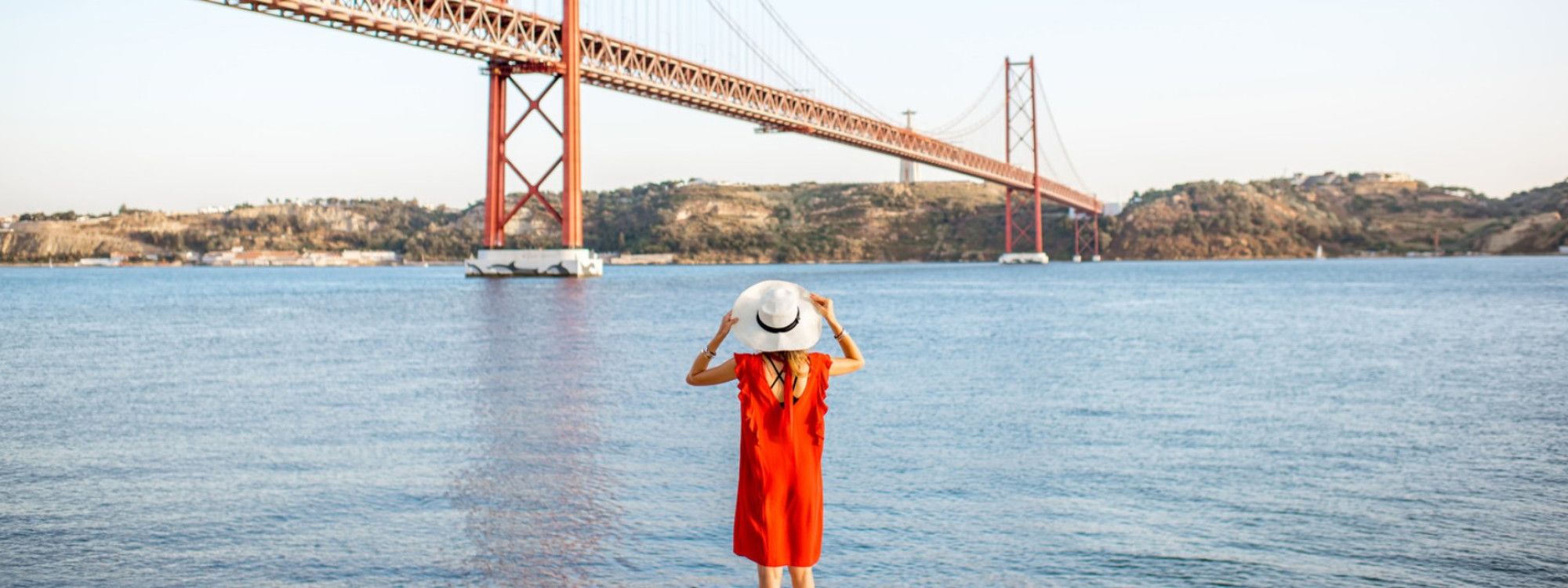
The Calouste Gulbenkian Museum, set in a garden north of the center, holds one of the city's finest art collections, from ancient Egypt to European painting. For something more modern, LX Factory, a former industrial complex near the 25 de Abril Bridge, is full of independent shops, restaurants and street art.
Tours and Tickets to Save Time
Many of Lisbon's top attractions are on steep hills, and the busiest have lines in high season. A guided tour or a hop-on hop-off ticket takes care of the climbs and the transport between areas.
How Many Days Do You Need?
Three days lets you see everything on this list at a comfortable pace: one day for the Baixa, Chiado and Alfama, one for Belém, and one for the Oceanarium or the museums. Add a fourth day for Sintra.