Book with an Expert +351 308 814 001
Best Beaches in Portugal: 15 Top Picks

Best Beaches in Portugal: 15 Top Picks

The best beaches in Portugal by region: the Algarve, the wild Costa Vicentina, Lisbon's coast, Nazaré and Porto Santo, with sea temperatures.

JM
João M.

January 6, 2026 • 7 min read

Best Beaches in Portugal: 15 Top Picks

✈️ THE SHORT VERSION

For classic beach holidays, go to the Algarve, with golden cliffs, sheltered coves and the warmest water on the mainland, especially in the east. For wild, empty beaches and surf, head to the Costa Vicentina on the south-west coast. From Lisbon, Cascais, Carcavelos and the Arrábida coves are less than an hour away, and for nine kilometers of golden sand, take the ferry or a short flight from Madeira to Porto Santo. Portugal has 396 Blue Flag beaches in 2026.

This guide covers the 15 best beaches in Portugal by region, which coast suits you, sea temperatures and when to go.

The Best Beaches at a Glance

BeachRegionBest for
Praia da MarinhaAlgarve (Lagoa)Cliffs, clear water, photos
Praia do CamiloAlgarve (Lagos)Small cove near Ponta da Piedade
Ilha de TaviraEastern AlgarveLong sandy island, warmer water
OdeceixeCosta VicentinaRiver meets the sea, families
ArrifanaCosta VicentinaSurf and cliff views
ComportaAlentejo coastLong, quiet beaches
Portinho da ArrábidaSetúbalCalm, turquoise water
CarcavelosLisbon coastEasy by train, surf lessons
GuinchoCascaisWind, kitesurf and dunes
Praia da UrsaSintra coastWild scenery
Costa da CaparicaSouth of LisbonMiles of sand near the city
NazaréCentral coastTown beach and giant waves
Praia de MiraCentral coastBlue Flag every year for 40 years
Costa NovaNear AveiroStriped houses and dunes
Porto SantoMadeira islandsNine kilometers of golden sand

The Algarve

The Algarve is Portugal's best-known beach region, with golden limestone cliffs in the center and west and long sandy islands in the east.

1. Praia da Marinha

Near Carvoeiro, in Lagoa, Praia da Marinha is a small sandy beach below orange limestone cliffs and rock arches. The Michelin Guide has named it one of the 100 most beautiful beaches in the world, and CNN included it in its list of the world's 20 most beautiful beaches in 2018. The path down is steep, so wear proper shoes.
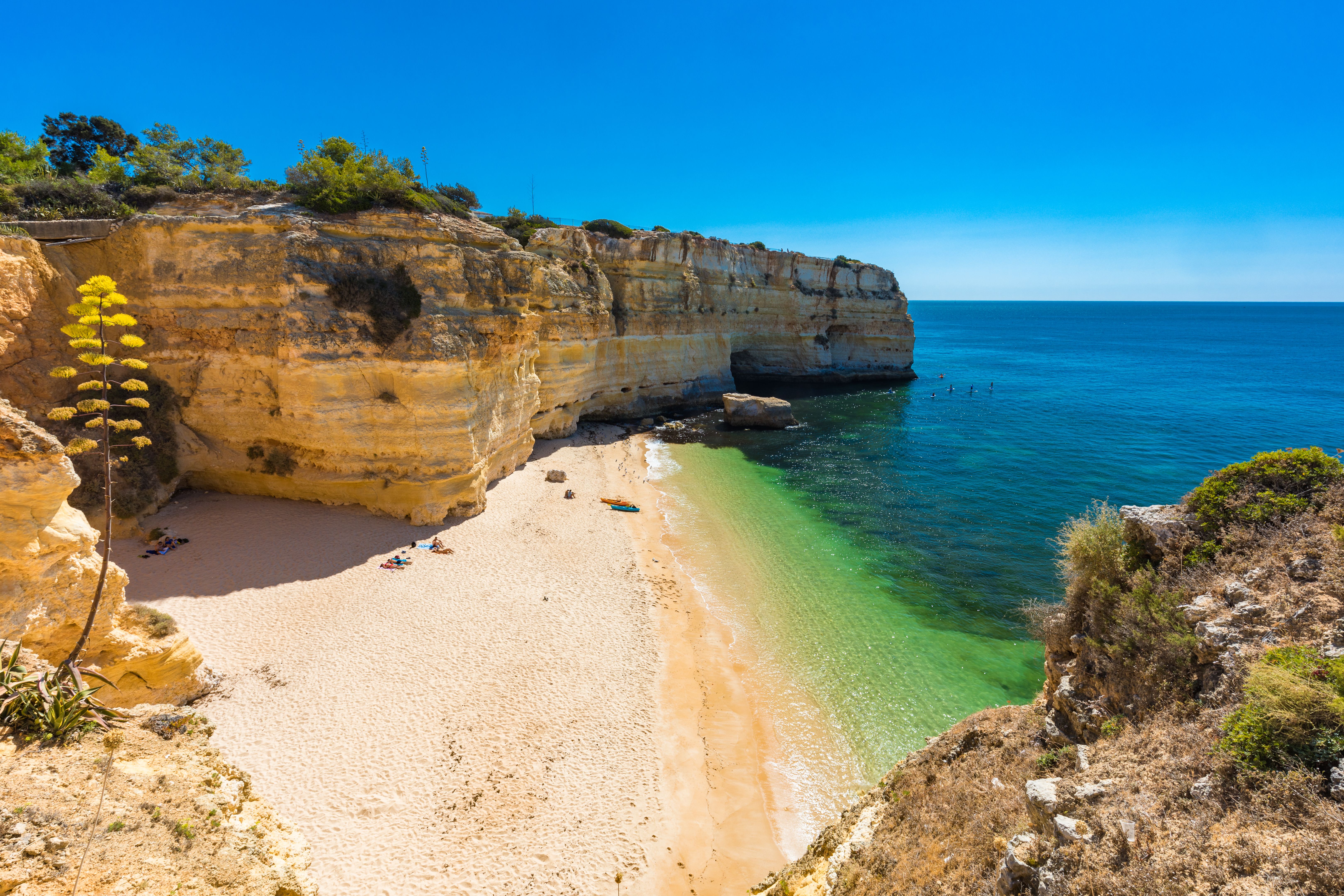
 

Golden limestone cliffs surround the sandy shore at Praia da Marinha in Lagoa, Portugal, with kayaks on the beach and paddleboarders on the blue water.
Praia da Marinha, Lagoa, Portugal

2. Praia do Camilo

Just outside Lagos, Praia do Camilo is a small cove reached by a long wooden staircase, next to the grottoes and rock arches of Ponta da Piedade. Arrive early in summer, as it is small and fills up fast.
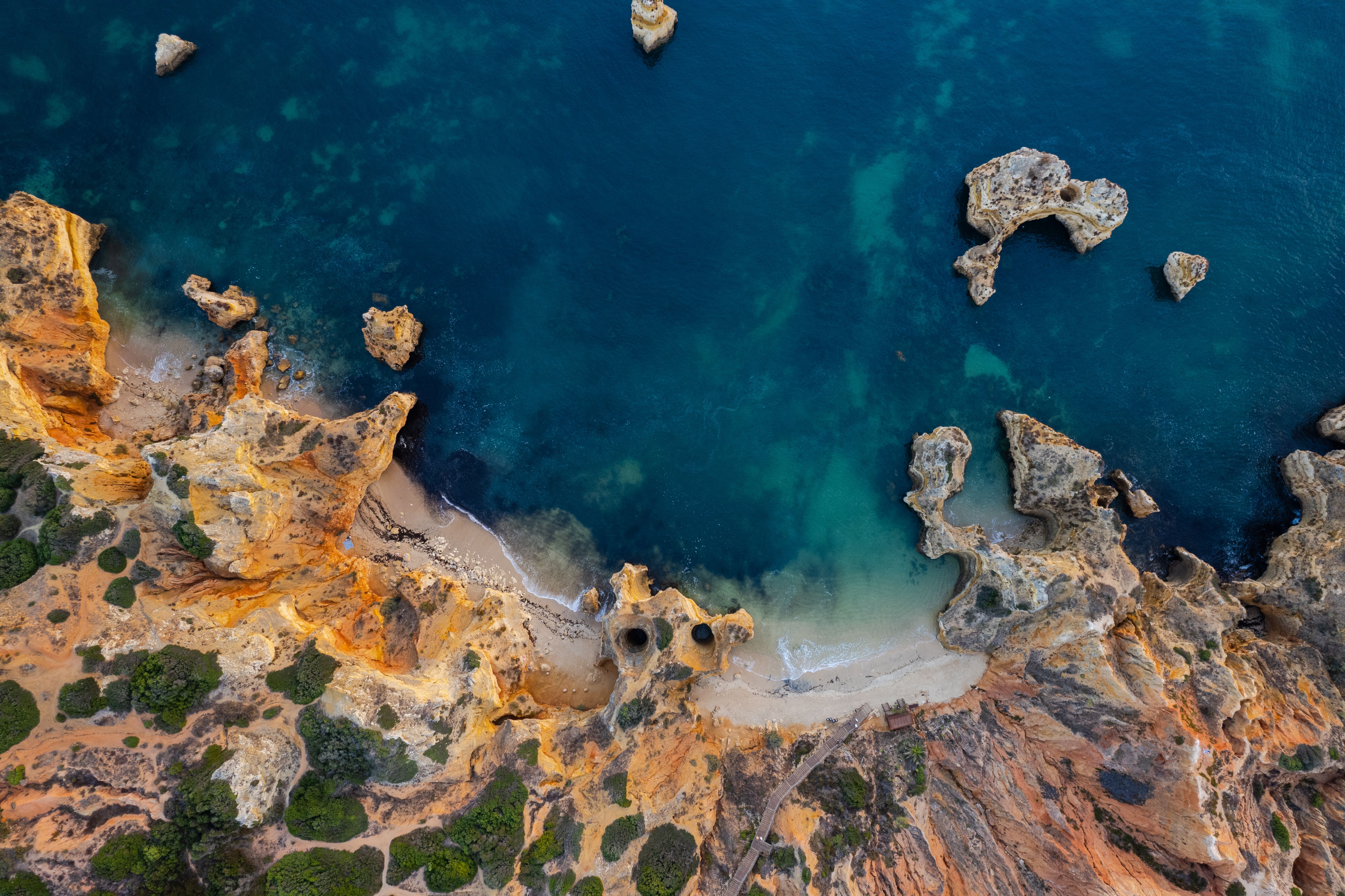
 

Aerial view of Praia do Camilo in Lagos, Portugal, showing small sandy coves, limestone sea stacks and a wooden staircase descending towards the water.
Praia do Camilo, Lagos, Portugal

3. Ilha de Tavira

In the eastern Algarve, Ilha de Tavira is a long sandy island in the Ria Formosa, reached by ferry from Tavira. The eastern Algarve usually has warmer water than the west, thanks to its more Mediterranean influence.
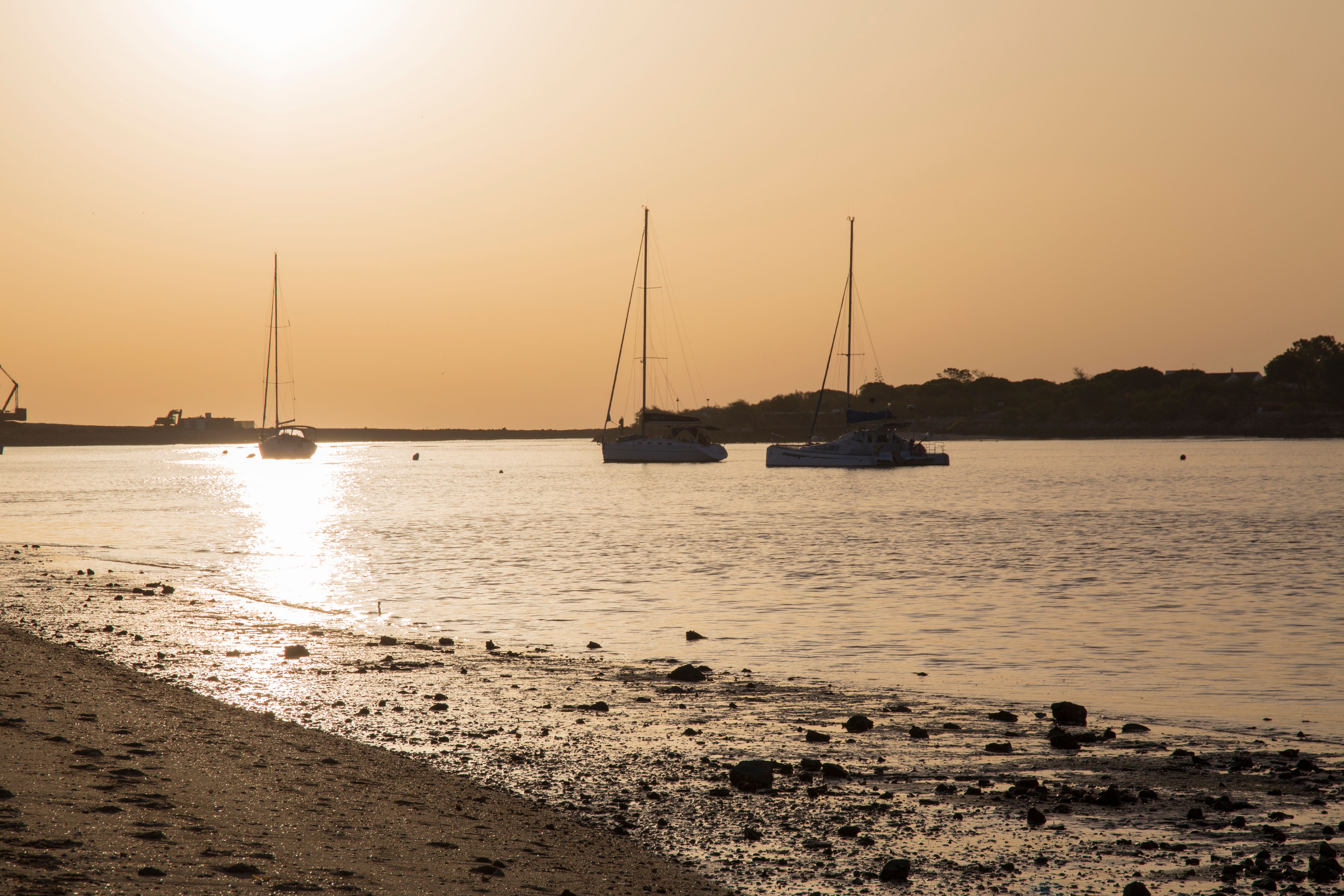
 

Sailboats and a catamaran sit on calm estuary waters near Tavira Island, Portugal, as golden morning light reflects beside the exposed shoreline.
Tavira Island, Tavira, Portugal

☀️ ALGARVE: 2 WEEKS WITH CAR

Two weeks on the Algarve coast with a rental car, to explore its beaches at your own pace.

See the trip →

The Costa Vicentina and the Alentejo Coast

North of the Algarve, the south-west coast is protected as the Southwest Alentejo and Vicentine Coast Natural Park, which runs from São Torpes to Burgau. Its beaches are wilder, with cliffs, dunes and strong Atlantic waves.

4. Odeceixe

At the border of the Algarve and the Alentejo, the Seixe River meets the sea at Odeceixe, so families can choose between the calm river and the ocean.
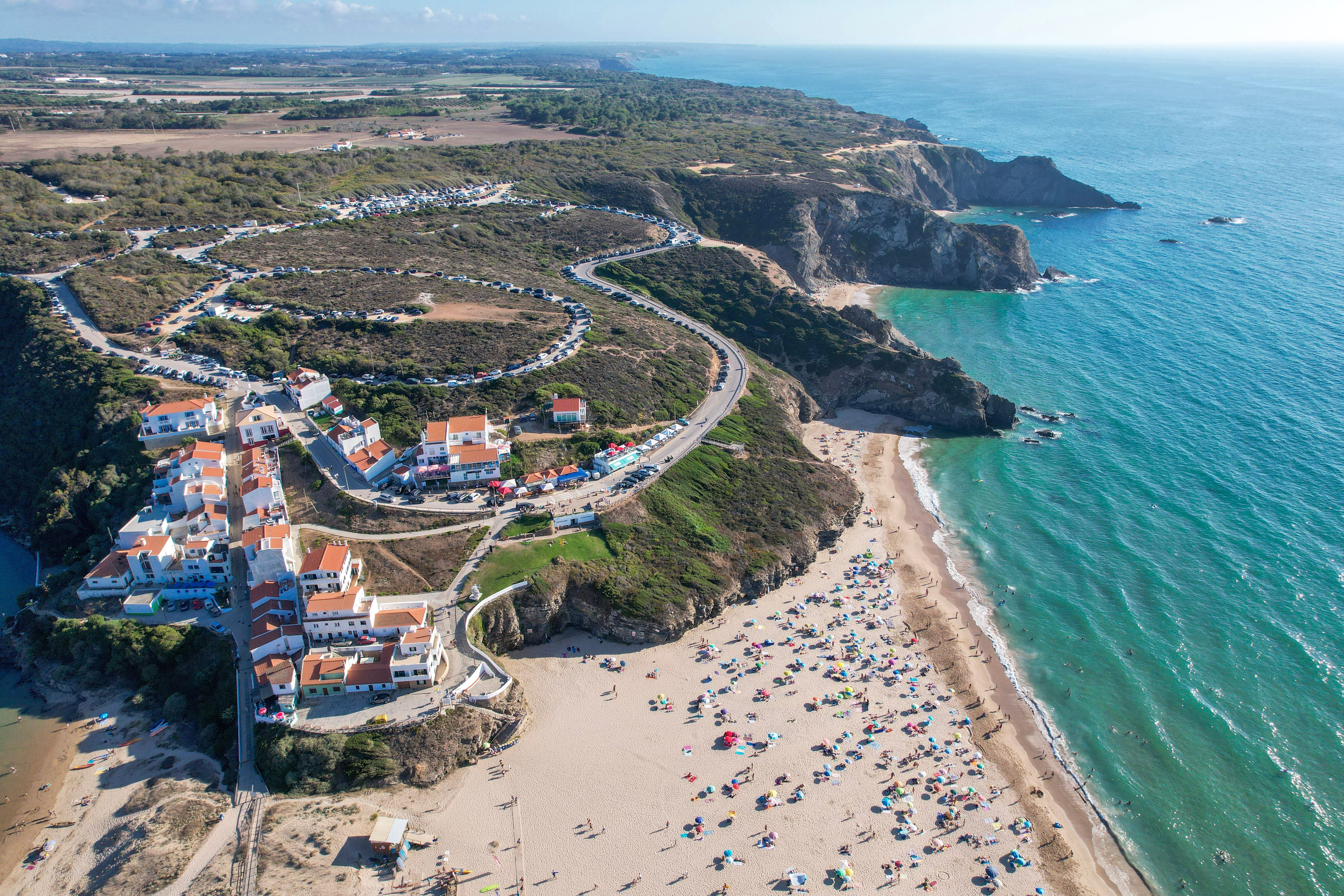
 

Aerial view of Praia de Odeceixe in Aljezur, Portugal, with beach umbrellas across the sand, white houses beside the shore and rocky cliffs extending along the coast.
Praia de Odeceixe, Aljezur, Portugal

5. Arrifana

Arrifana is a curved bay below high cliffs, near Aljezur, and one of the Algarve's most popular spots for surf lessons.
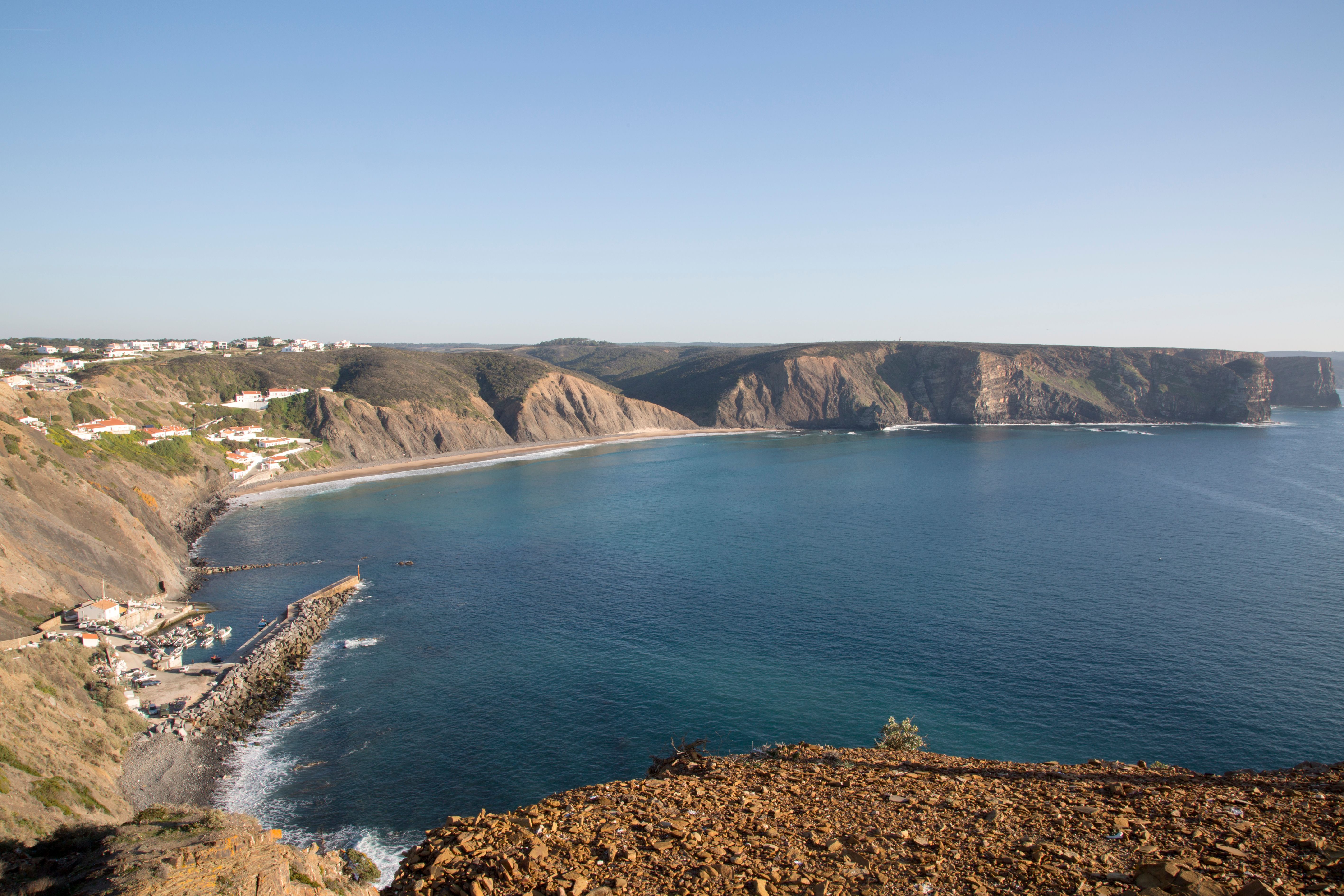
 

View across Arrifana Bay in Aljezur, Portugal, showing a small fishing harbour, a narrow sandy beach beneath steep cliffs and white houses on the hillside.
Praia da Arrifana, Aljezur, Portugal

6. Comporta

South of Setúbal, Comporta has long, quiet beaches backed by dunes and rice fields, popular for a slower, more upscale beach escape.
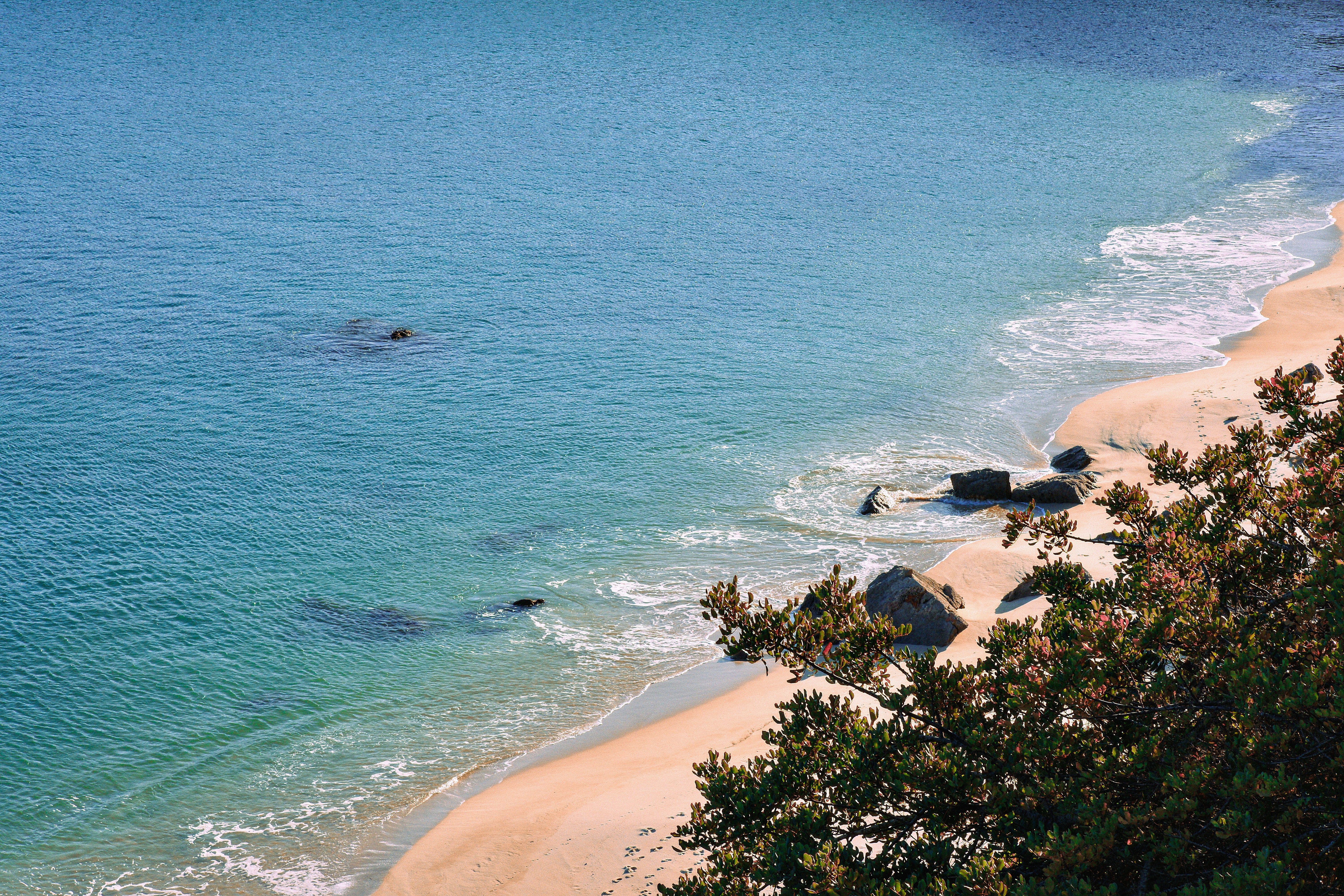
 

Clear turquoise water washes onto the sandy shoreline at Comporta, Portugal, with scattered boulders beside the waves and leafy shrubs in the foreground.
Comporta Beach, Comporta, Portugal

Lisbon and Setúbal

Lisbon is one of the few European capitals with Atlantic beaches less than an hour away, by train, bus or car.

7. Portinho da Arrábida

In the Arrábida Natural Park, south of Setúbal, this sheltered bay has calm, clear water below green hills, a contrast with the open Atlantic beaches.
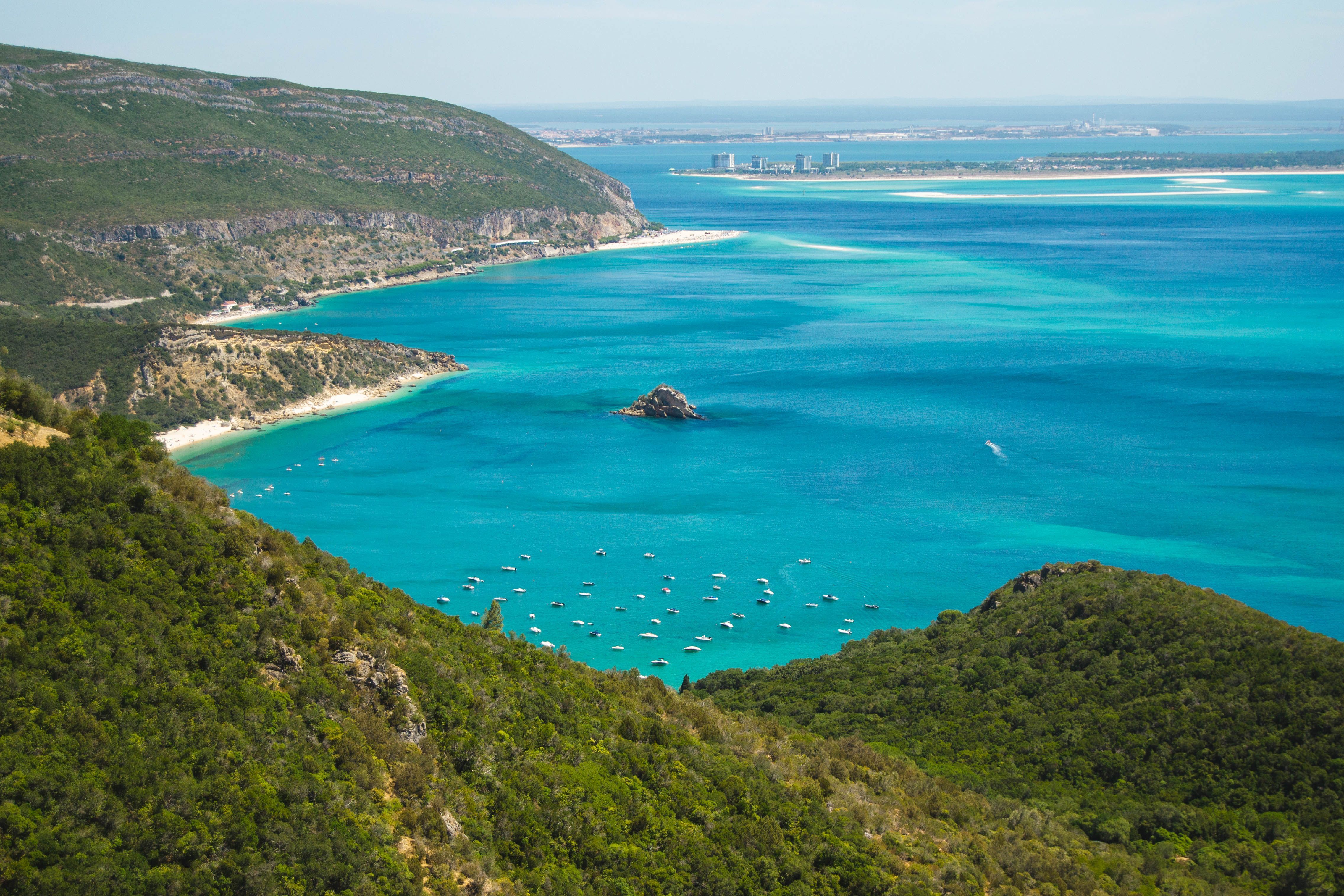
 

View from the wooded hills of Arrábida Natural Park in Setúbal, Portugal, across turquoise water dotted with anchored boats, with the Tróia Peninsula in the distance.
Arrábida Natural Park, Setúbal, Portugal

8. Carcavelos

Carcavelos is a long sandy beach on the train line between Lisbon and Cascais, easy to reach without a car and a good place for surf lessons.
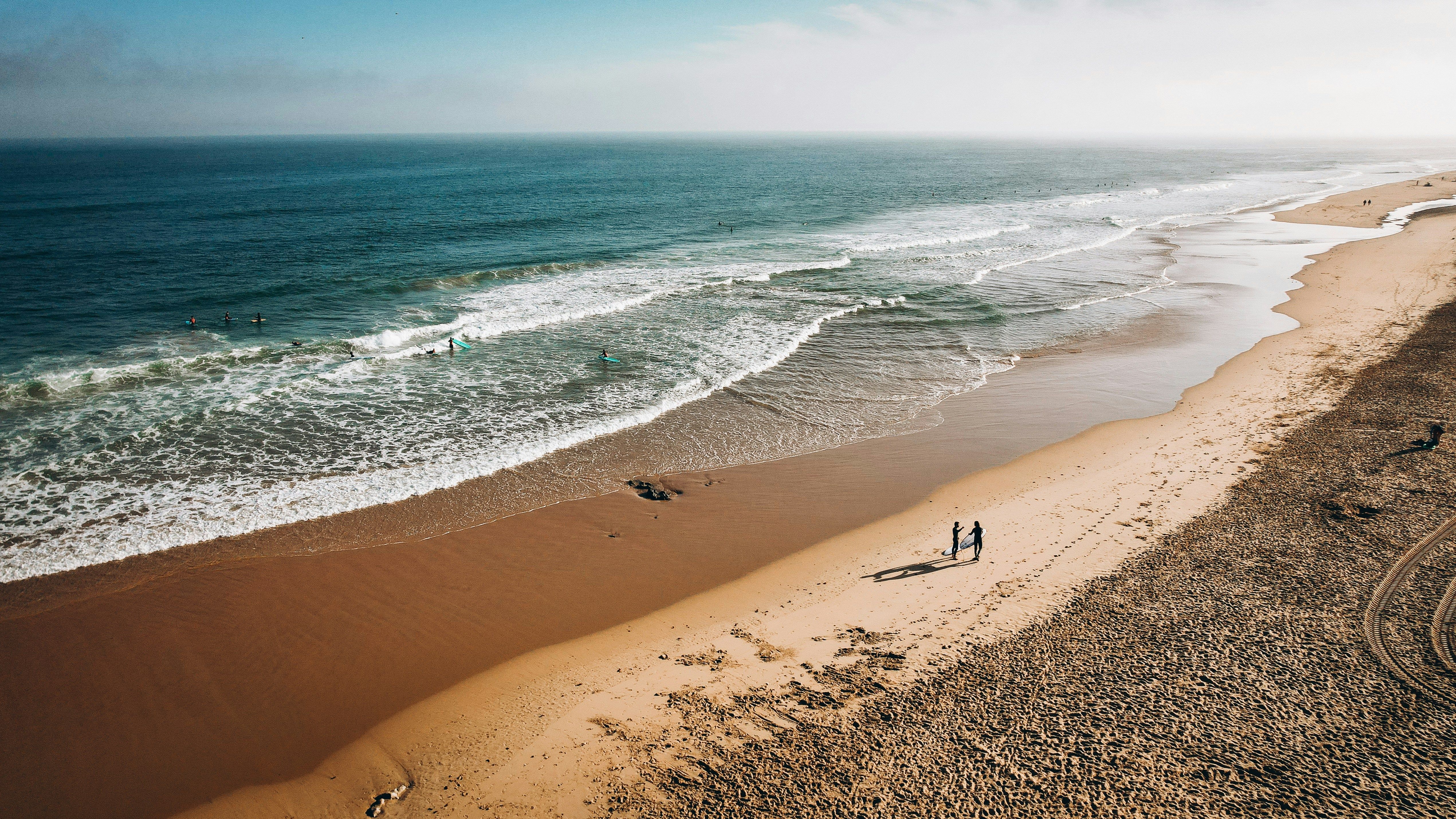
 

Surfers wait among breaking waves at Carcavelos Beach in Cascais, Portugal, while two people carrying a surfboard walk beside the water on the broad sandy shore.
Carcavelos Beach, Cascais, Portugal

9. Guincho

West of Cascais, Guincho is a wild beach of dunes and strong winds, better for kitesurfing, windsurfing and walks than for a calm swim.
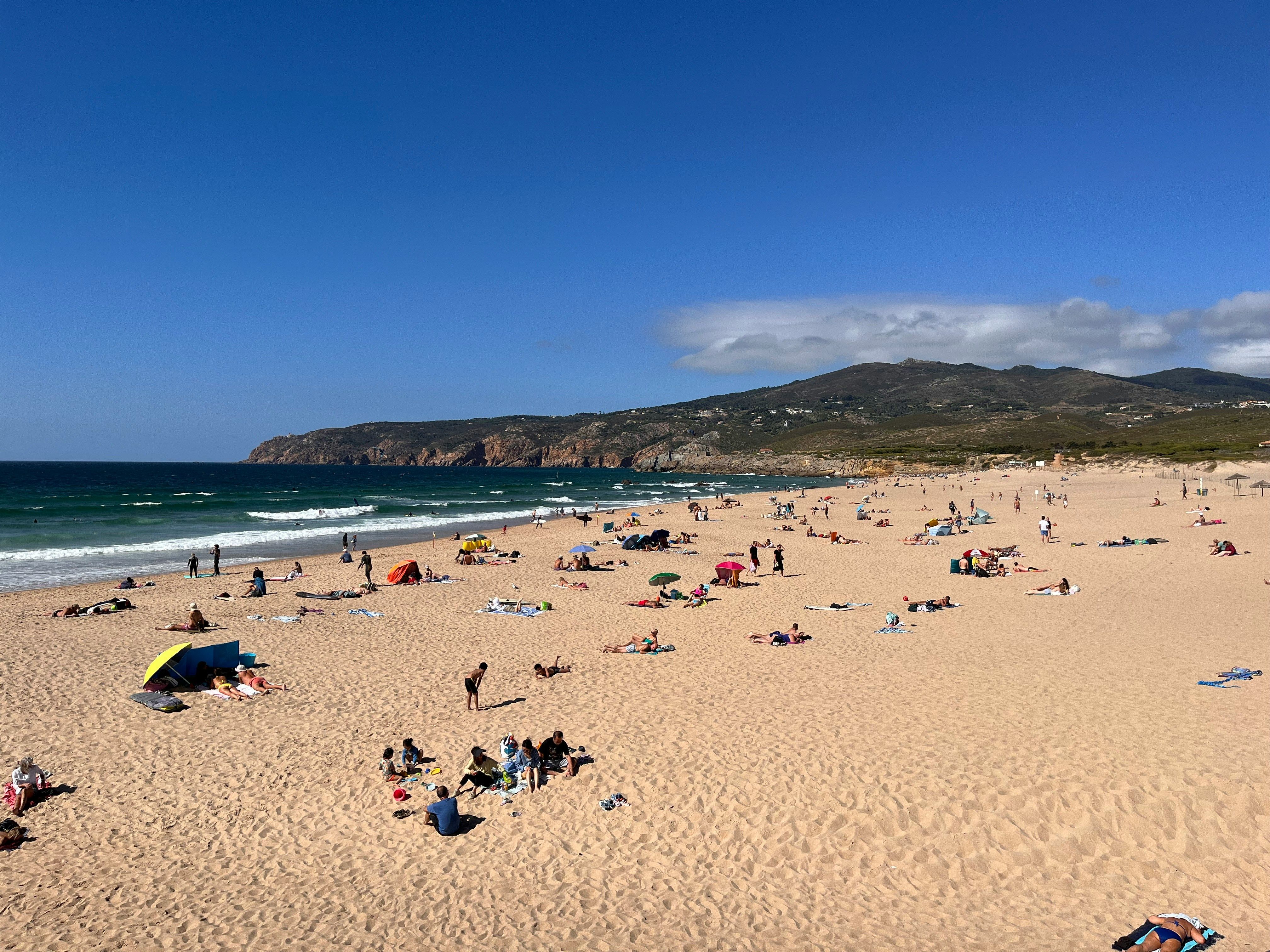
 

Beachgoers, umbrellas and windbreaks spread across Guincho Beach in Cascais, Portugal, with Atlantic surf, a rocky headland and the Sintra hills beyond.
Guincho Beach, Cascais, Portugal

10. Praia da Ursa

Near Cabo da Roca, on the Sintra coast, Praia da Ursa is reached by a steep path and rewards the effort with sea stacks and wild scenery. It is not for young children or anyone unsure on their feet.
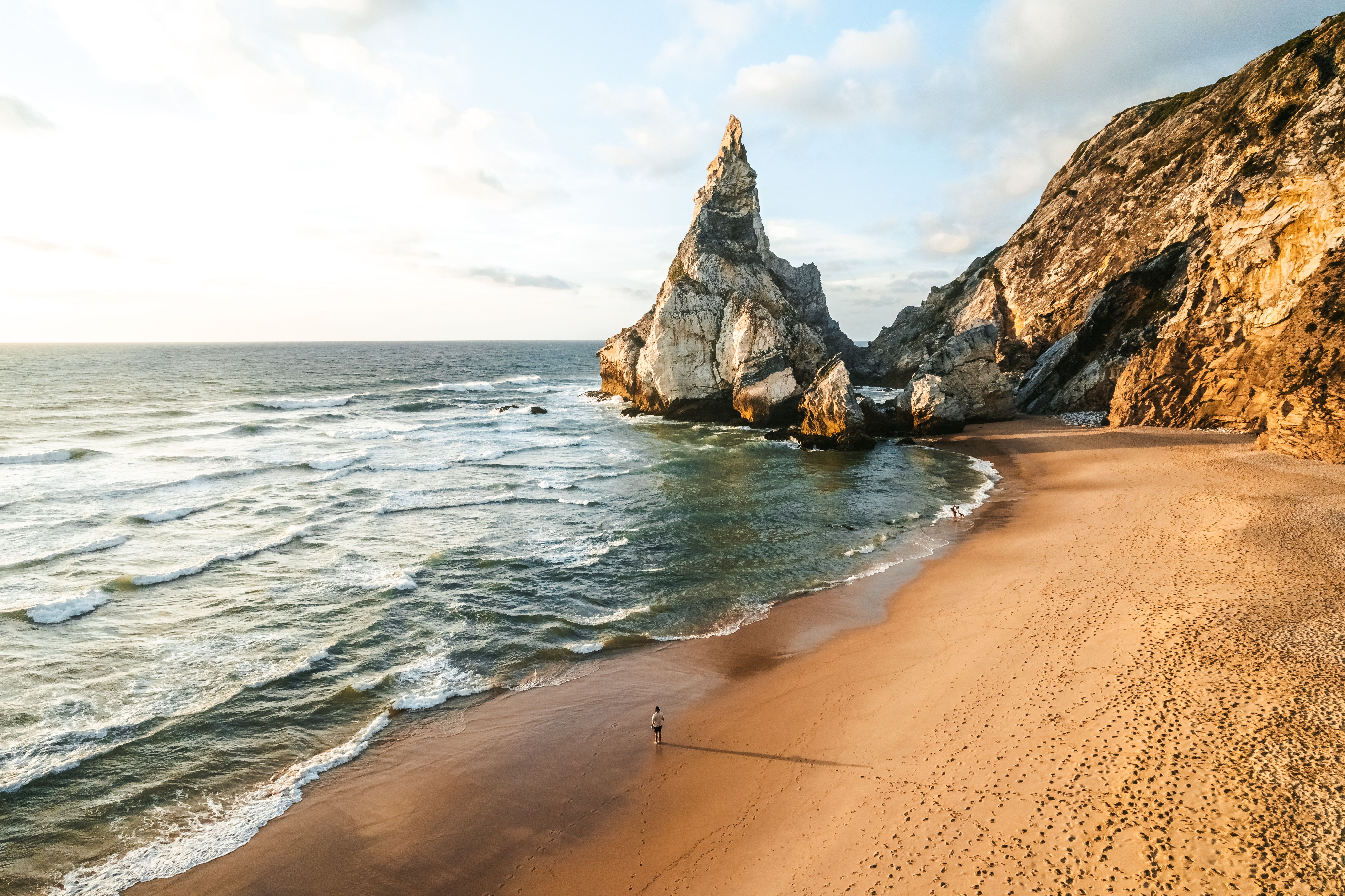
 

A tall pointed sea stack rises beside Praia da Ursa in Sintra, Portugal, as warm evening light illuminates the cliffs and waves reach the footprint covered sand.
Praia da Ursa, Sintra, Portugal

11. Costa da Caparica

South of the Tagus, Costa da Caparica stretches for kilometers of sand, with beach bars and a more local feel, about half an hour from central Lisbon.
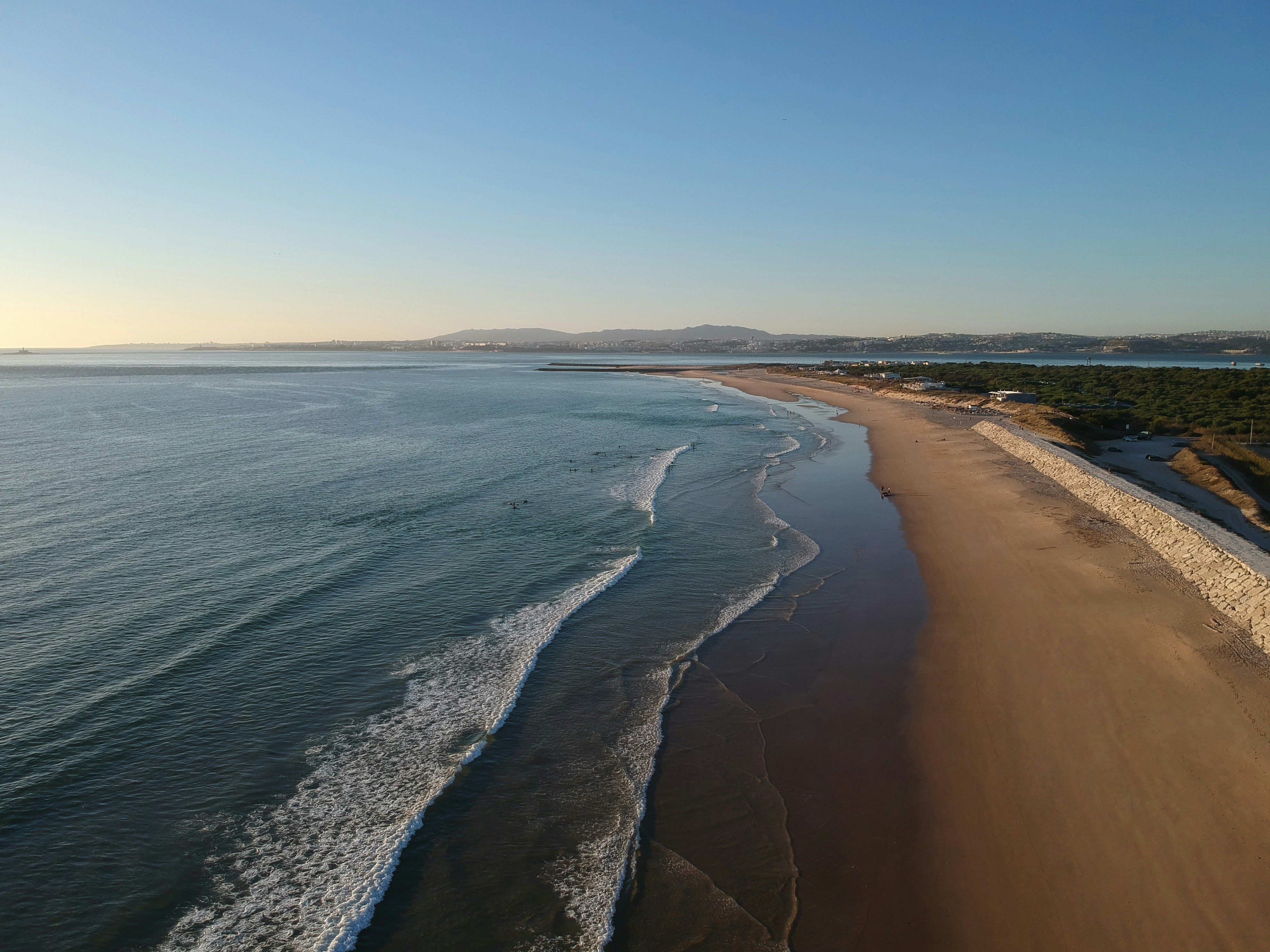
 

Aerial view of the coast at Costa da Caparica in Almada, Portugal, showing gentle waves, a long sandy beach and a stone seawall beside wooded land.
Costa da Caparica, Almada, Portugal

Central Portugal

12. Nazaré

Nazaré has a long town beach for swimming in summer and, from Praia do Norte, some of the biggest waves ever surfed. In October 2020, Sebastian Steudtner rode a 26.21-meter (86-foot) wave there, a Guinness World Record.
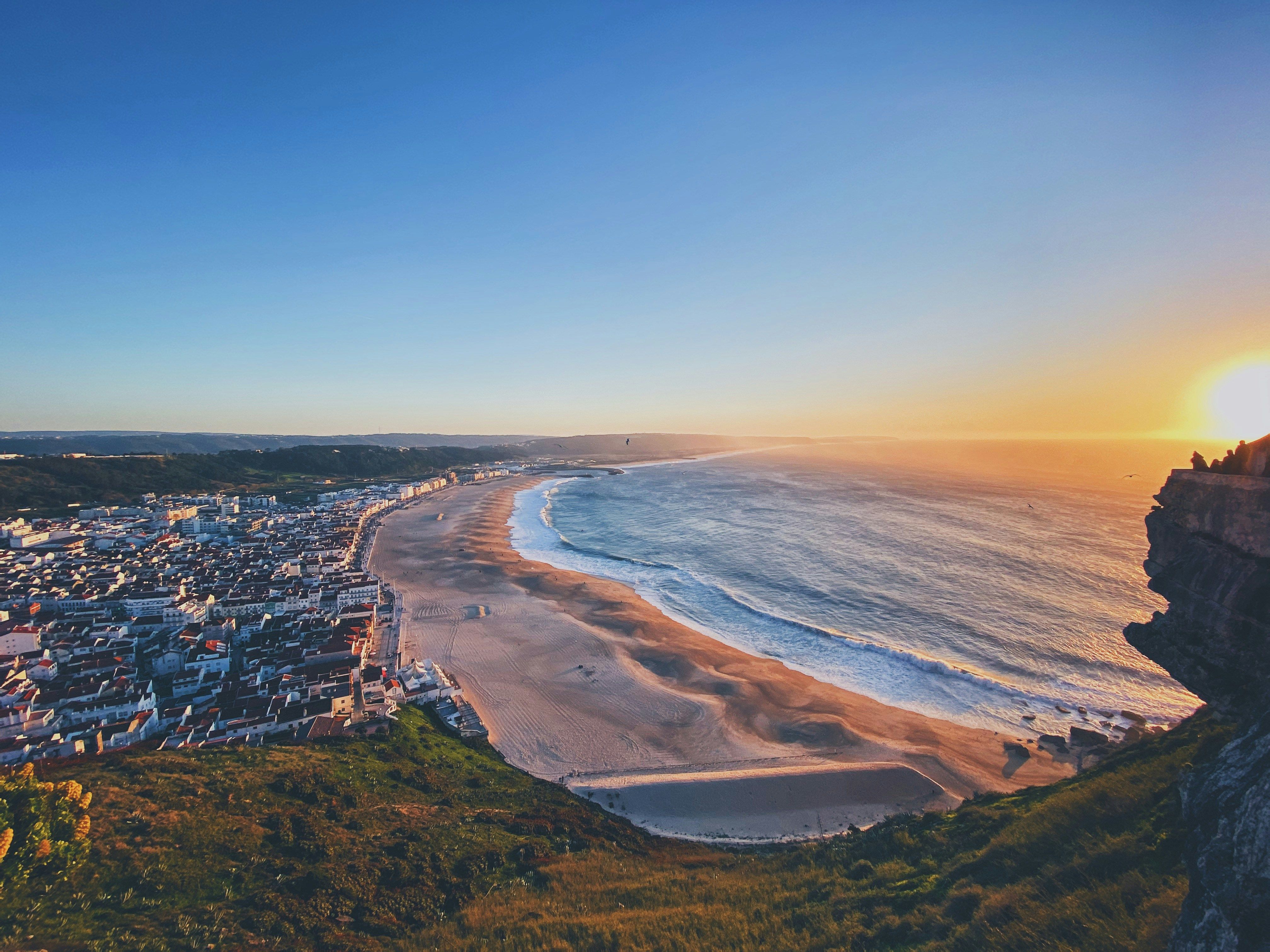
 

Sunset view over Nazaré Beach in Portugal, with dense town rooftops beside the sweeping sandy shore and rows of waves rolling in from the Atlantic.
Nazaré Beach, Nazaré, Portugal

13. Praia de Mira

South of Aveiro, Praia de Mira has held the Blue Flag for 40 consecutive years, which Portugal's government describes as a record unique in the world.
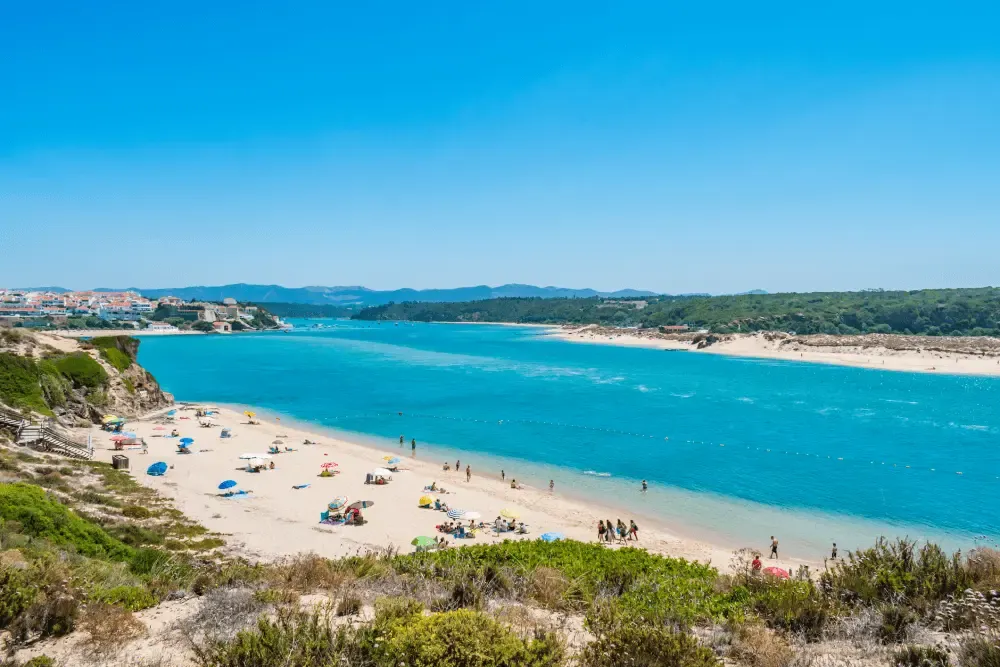
 

Beachgoers and umbrellas line a sandy shore at Praia de Mira, Portugal, beside turquoise water, with buildings and a wooded bank visible across the inlet.
Praia de Mira, Mira, Portugal

14. Costa Nova

Near Aveiro, Costa Nova is known for its striped wooden houses facing a long beach and the lagoon behind it.
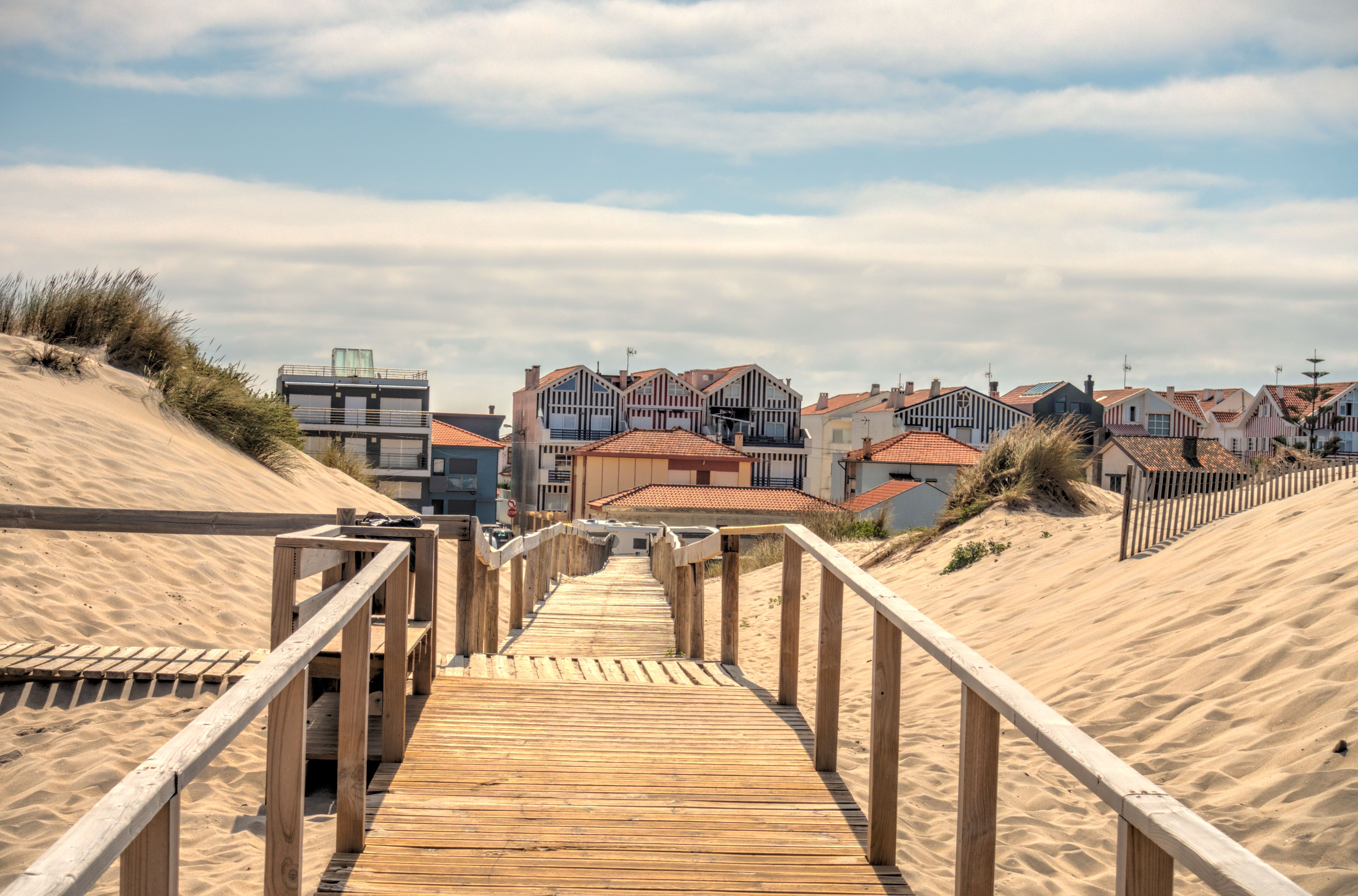
 

A wooden boardwalk crosses sandy dunes towards the striped houses of Costa Nova in Ílhavo, Portugal, beneath a cloudy sky.
Costa Nova, Ílhavo, Portugal

The Islands

15. Porto Santo

Madeira itself has few sandy beaches, but its neighbor, Porto Santo, has about nine kilometers of golden sand, reached by ferry or a short flight from Madeira. In the Azores, look for volcanic black-sand beaches and natural lava pools.
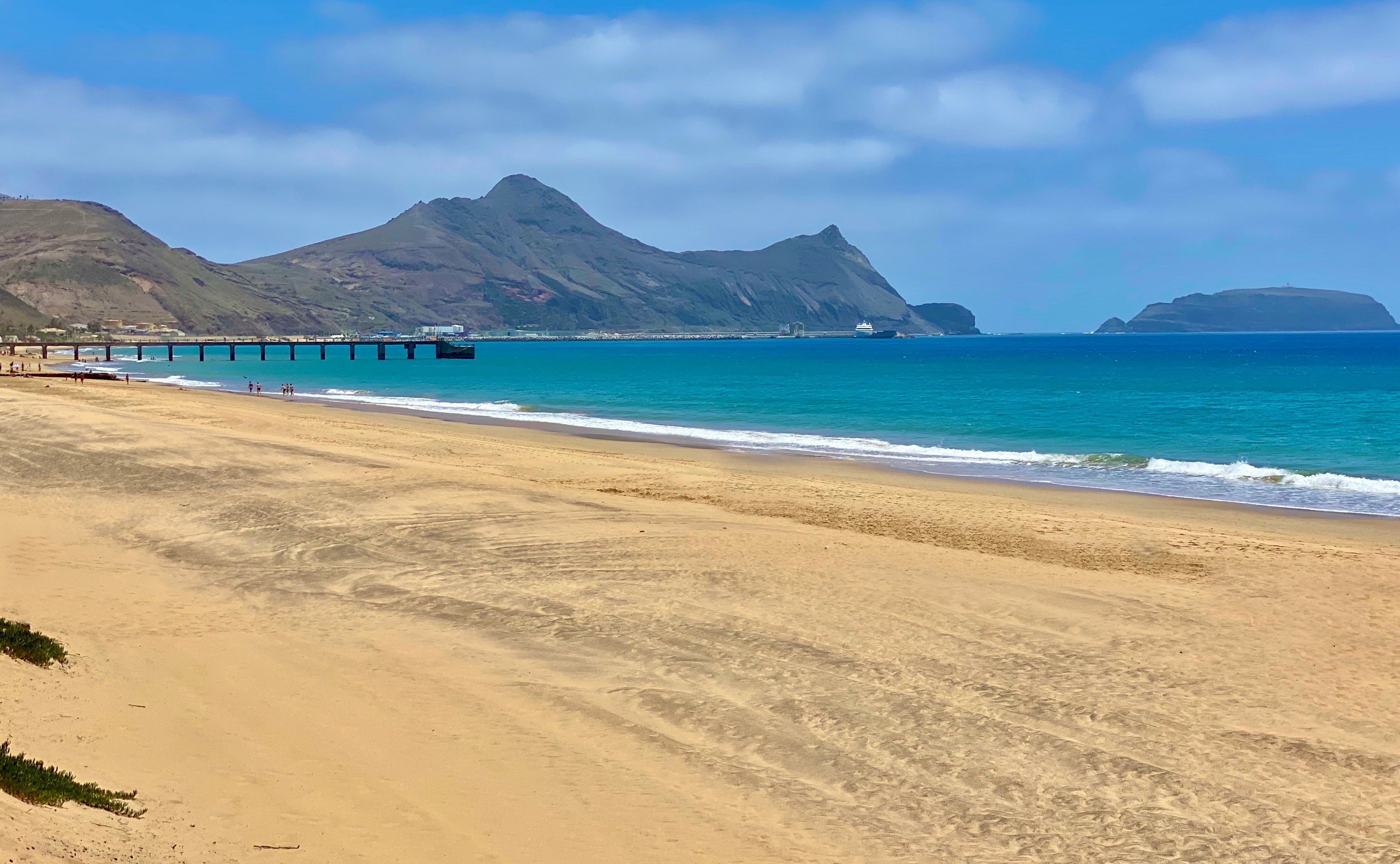
 

Broad golden sands meet turquoise water at Porto Santo Beach in Portugal’s Madeira archipelago, with a pier, rugged hills and an offshore islet in the background.
Porto Santo Beach, Porto Santo, Portugal

Which Coast Is Right for You?

You wantGo to
Warm water and easy beach daysThe eastern and central Algarve
Cliffs, coves and boat trips to cavesThe central Algarve, around Lagoa and Lagos
Wild, quiet beaches and surfThe Costa Vicentina
A city break with beach daysLisbon, with Cascais, Carcavelos or Arrábida
Big waves to watch, not swimNazaré in winter
Sand and sea on an islandPorto Santo

Sea Temperatures and When to Go

Portugal's sea is Atlantic, so it is cooler than the Mediterranean. In August, sea temperatures across Portugal range from about 16 to 24°C (61 to 75°F), and Faro averages 21.3°C (70°F). The west coast and the western Algarve can be colder, as summer north winds push surface water offshore and bring colder water up from below.

The best months for beach holidays are June to September, and September is warm with fewer crowds. Portugal has 350 coastal and 46 inland Blue Flag beaches in 2026, a mark of water quality, safety and services, and ranks fifth in the world for Blue Flag coastal beaches.


Our Beach Trips

🏖️ PORTUGAL WITH KIDS: A WORLD-CLASS FAMILY RESORT

A beach resort holiday in the Algarve for families, with flights included.

See the trip →

Plan it your way

Custom Your Trip

Tell our local travel advisors which towns, dates and experiences you want and we build the beach trip around you, flights included.

Start your custom trip →

Limited time

Portugal Packages On Sale

Flights, hotels and rental car bundled at reduced prices. See every package currently on sale and book while it lasts.

Book now →

Frequently Asked Questions

Where are the best beaches in Portugal?
What is the most beautiful beach in Portugal?
Where is the warmest sea in Portugal?
What are the best beaches near Lisbon?
Is the water cold in Portugal?

Keep Reading