Alfama District Lisbon: What to See & Do
A guide to Alfama, Lisbon's oldest district: its history, the castle, the Sé, the viewpoints, fado, the National Pantheon and a walking route.
November 7, 2022 • 7 min read
Explore The Alfama Neighborhood in Lisbon, Portugal
Alfama at a Glance
A Short History of Alfama
Alfama's name comes from the Arabic al-hamma, hot springs, and its lanes take their shape from the Moorish city. After the Christian conquest of Lisbon in 1147, it remained the heart of the old city, home to sailors, fishermen and craftsmen. The great earthquake of 1755 destroyed the Baixa below, but Alfama was not destroyed, which is why its tangled street plan survives today. It is also one of the neighborhoods most closely linked to fado.
The Best Things to See and Do in Alfama
1. São Jorge Castle
At the top of the hill, São Jorge Castle has walls, towers and gardens with views over most of Lisbon. It opens at 9 am every day, and arriving early is the best way to walk the walls before the crowds.

2. The Miradouros: Santa Luzia and Portas do Sol
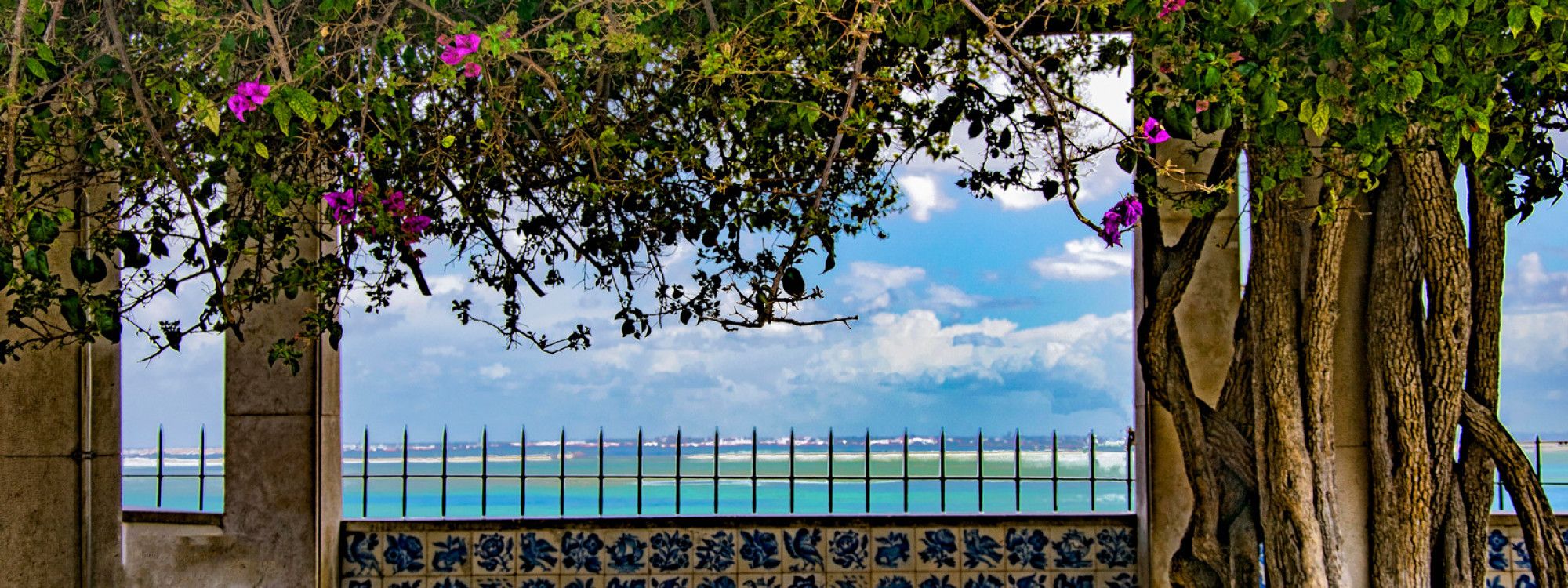
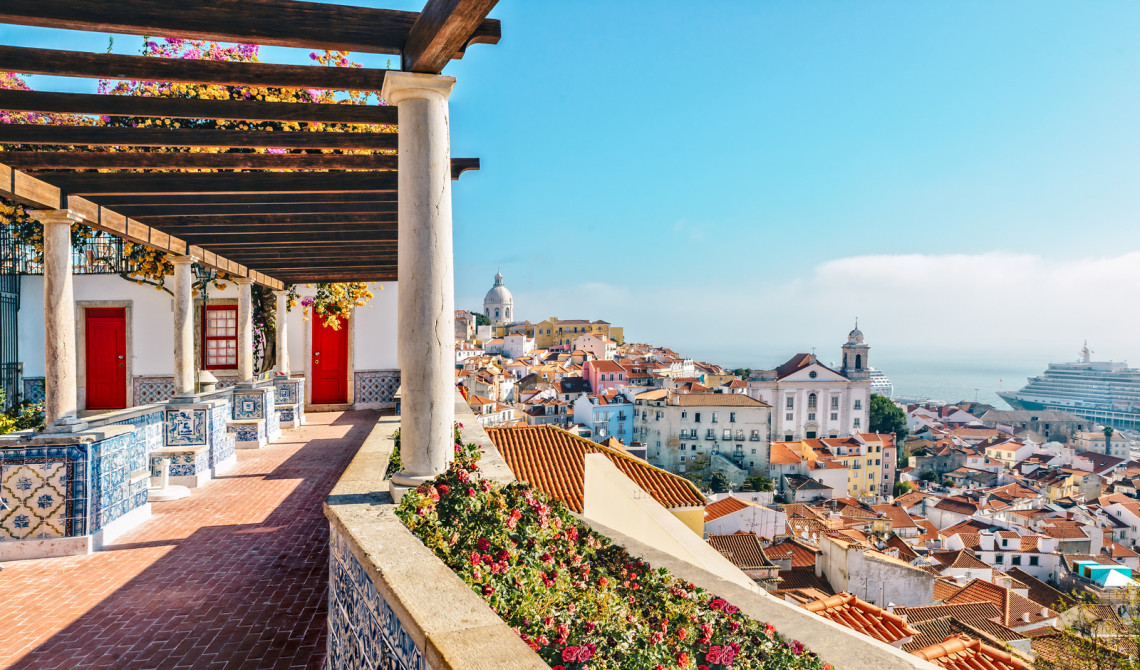
Just below the castle, these two viewpoints have the classic view over Alfama's red roofs, white churches and the river. Santa Luzia has a pergola covered in bougainvillea and tile panels, and Portas do Sol has a terrace café.
3. Lisbon Cathedral (Sé)
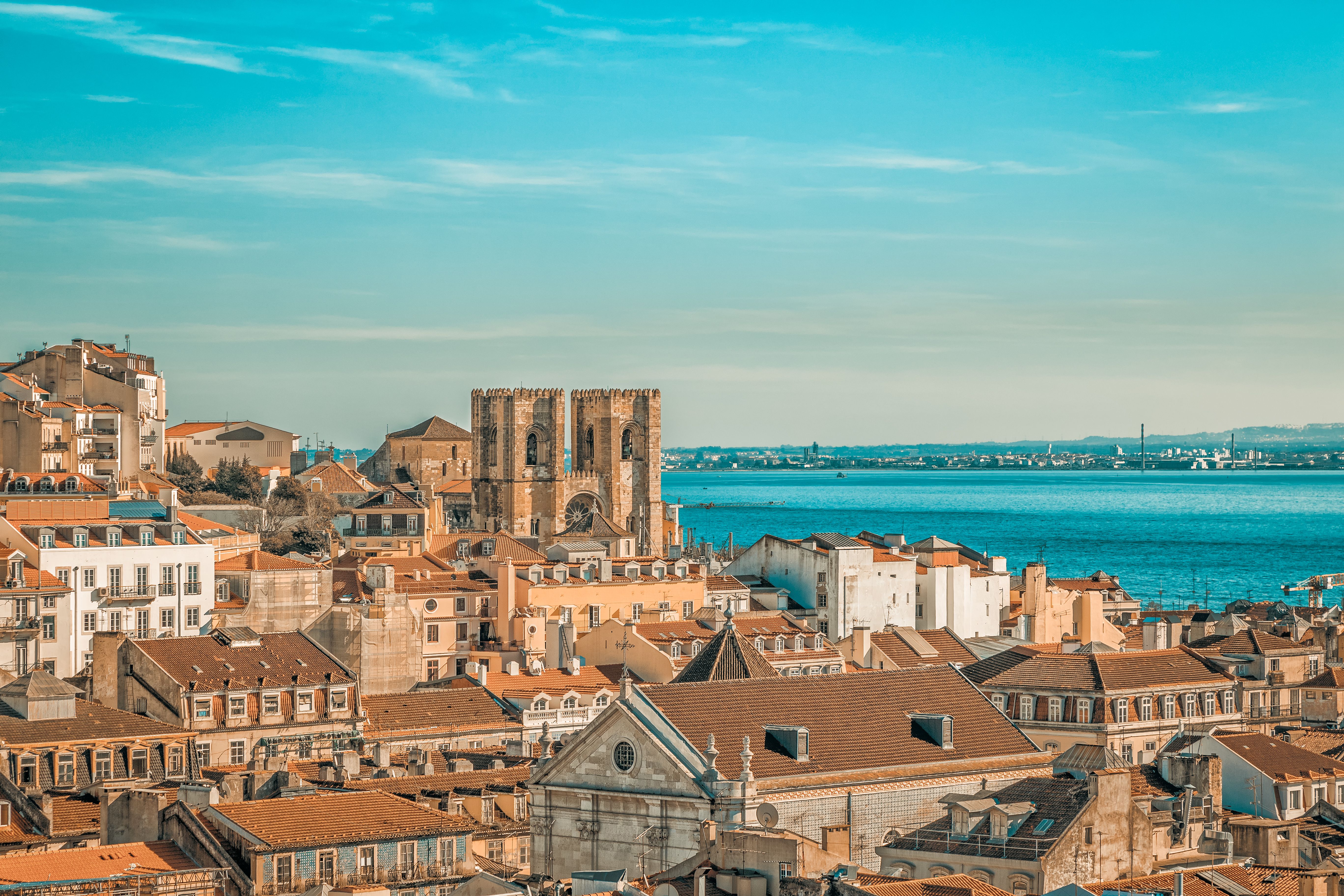
The Sé is Lisbon's oldest church, built in the 12th to 14th centuries after the Christian conquest. Its fortress-like Romanesque front, with two towers, stands on the route of Tram 28 at the bottom of Alfama.
4. Igreja de Santo António
Next to the Sé, this church stands where, according to tradition, Saint Anthony, Lisbon's patron saint, was born. He is the saint of the city's biggest festival, on the night of June 12 to 13.
5. Museum of Decorative Arts
Next to the Santa Luzia viewpoint, the Museum of Decorative Arts fills a 17th-century mansion with Portuguese furniture, silver, tiles and textiles, arranged as the rooms of a noble house.
6. Monastery of São Vicente de Fora
On the edge of Alfama, this monastery is where kings of the House of Braganza are buried. Its cloisters are lined with 18th-century tile panels, and its roof terrace has a wide view over the river.

7. National Pantheon (Santa Engrácia)
The white dome of the Church of Santa Engrácia is one of Alfama's landmarks. Its construction began in 1682 and was only completed in 1966, so slowly that the Portuguese still call any endless project "obras de Santa Engrácia." Today it is the National Pantheon, where figures such as the writer Eça de Queiroz, the fado singer Amália Rodrigues and the football player Eusébio are buried. Climb to the terrace around the dome for a 360-degree view over the river and Alfama.

8. Feira da Ladra
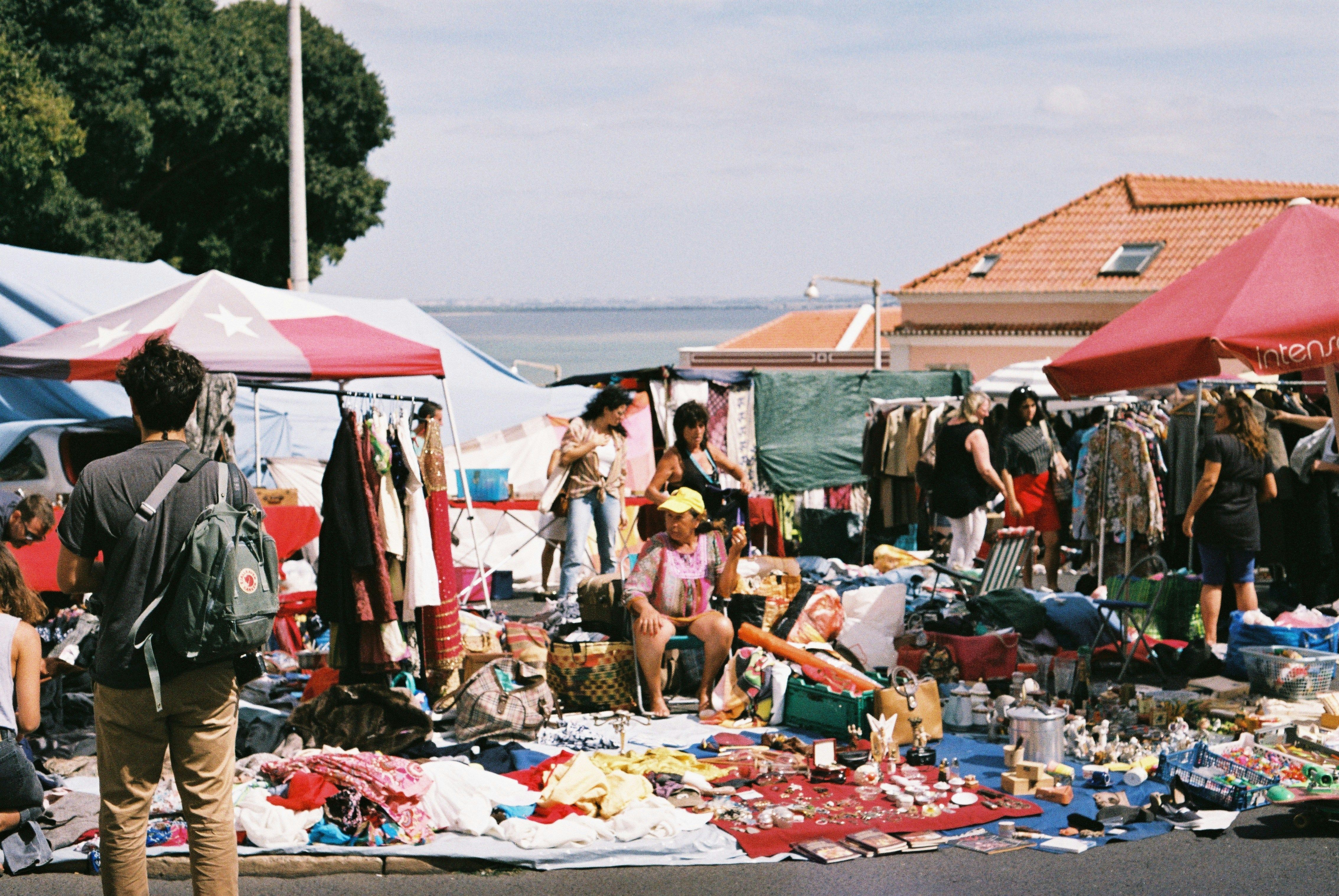
On Tuesdays and Saturdays, the Feira da Ladra, Lisbon's flea market, fills the Campo de Santa Clara between São Vicente de Fora and the Pantheon, with antiques, records, tiles and second-hand finds.
9. Casa dos Bicos
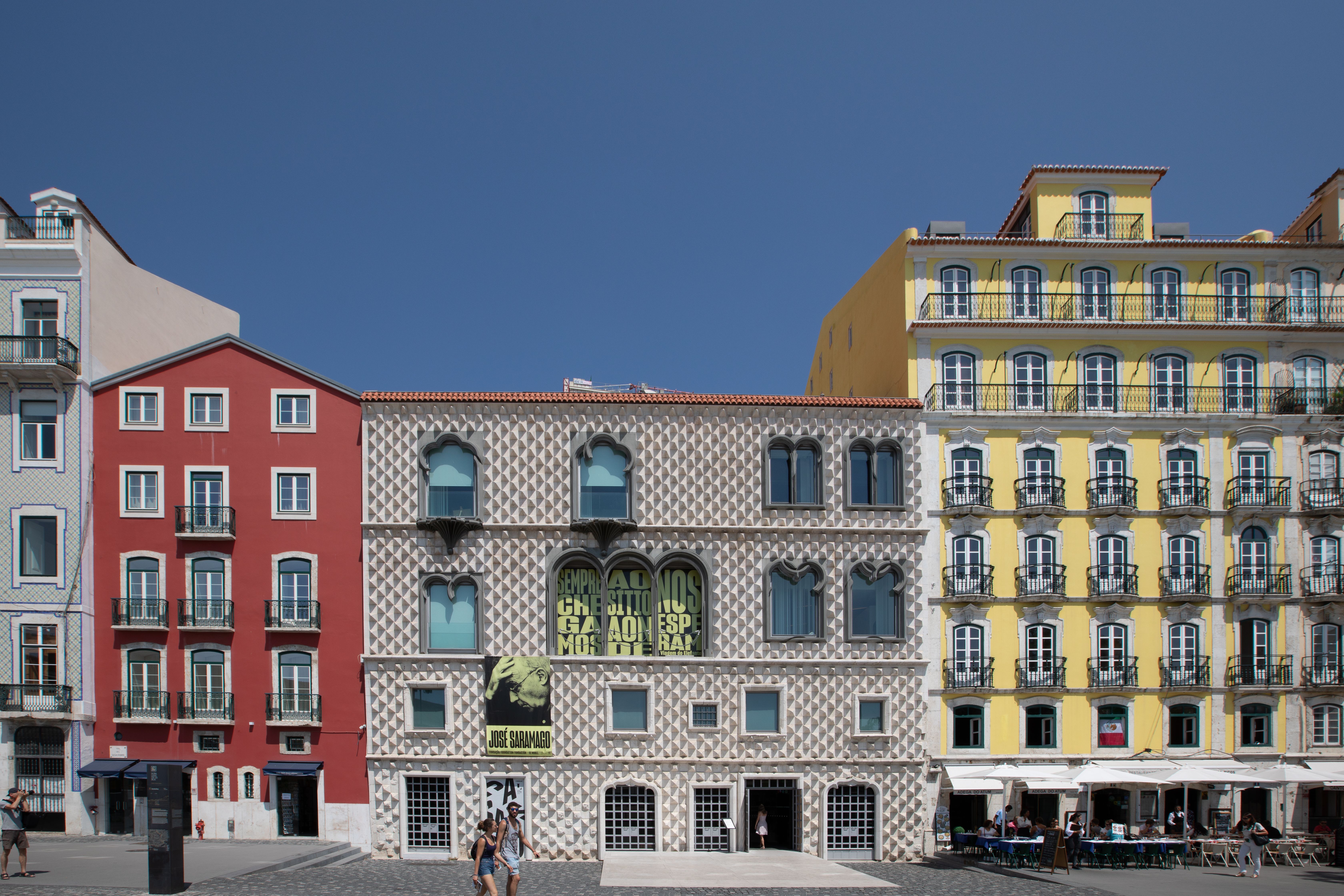
Near the river, at the bottom of Alfama, the Casa dos Bicos was built in 1523, and its front is covered in diamond-shaped stones. It is now home to the José Saramago Foundation, with the Nobel Prize-winning writer's library and an exhibition on his life. His ashes lie under an olive tree outside.
10. Museu do Fado
Opened in 1998 on Largo do Chafariz de Dentro, the Fado Museum tells the story of Lisbon's music through instruments, recordings and the lives of its singers. Fado was added to UNESCO's list of Intangible Cultural Heritage in 2011. The museum has been undergoing renovation, so check that it is open before you go.

Fado in Alfama
Fado is the music of Lisbon, songs of longing and fate, sung to the Portuguese guitar. In Alfama, many small restaurants and fado houses serve dinner with live fado in the evening. Shows usually start after dinner time, and the audience is expected to stay quiet while the singers perform. Book ahead, especially on weekends.
Santo António Festivals in June
In June, Alfama is the center of the Festas de Lisboa. On the night of June 12 to 13, the eve of Santo António, its lanes fill with street parties, grilled sardines, music and decorations, and the neighborhoods' popular marches compete in the city's parade. It is the liveliest time of year in Alfama, and also the most crowded.
A Walking Route Through Alfama
Alfama is steep, so start at the top and walk down.
- São Jorge Castle. Arrive at opening time and walk the walls.
- Santa Luzia and Portas do Sol. Walk down to the viewpoints and the Museum of Decorative Arts.
- The lanes of Alfama. Head down through the stairways and alleys toward Largo do Chafariz de Dentro, and let yourself get lost.
- Museu do Fado. If it is open, visit the museum on the square.
- Casa dos Bicos. Walk west along the bottom of Alfama to the José Saramago Foundation.
- The Sé and Santo António. Finish at the cathedral, then continue down to the Baixa and Praça do Comércio.
On a Tuesday or Saturday? Start instead at São Vicente de Fora, the Feira da Ladra and the National Pantheon, then walk across to the castle.
Tips for Visiting Alfama
- Wear good shoes. The lanes are steep and the cobblestones are slippery, especially when wet.
- Use public transport to go up. Tram 28 and bus 737 save you the climb to the castle.
- Go early or late. Alfama is calmest in the early morning and at sunset.
- Watch your belongings. Tram 28 and the busiest viewpoints are known for pickpockets.
- Respect the residents. Alfama is still a lived-in neighborhood, so keep noise down at night.
Staying in Alfama
Alfama is one of the most atmospheric places to stay in Lisbon, close to the castle, the river and the fado houses. The trade-off is the hills and the cobblestones, so it is less suited to travelers with heavy luggage or limited mobility.