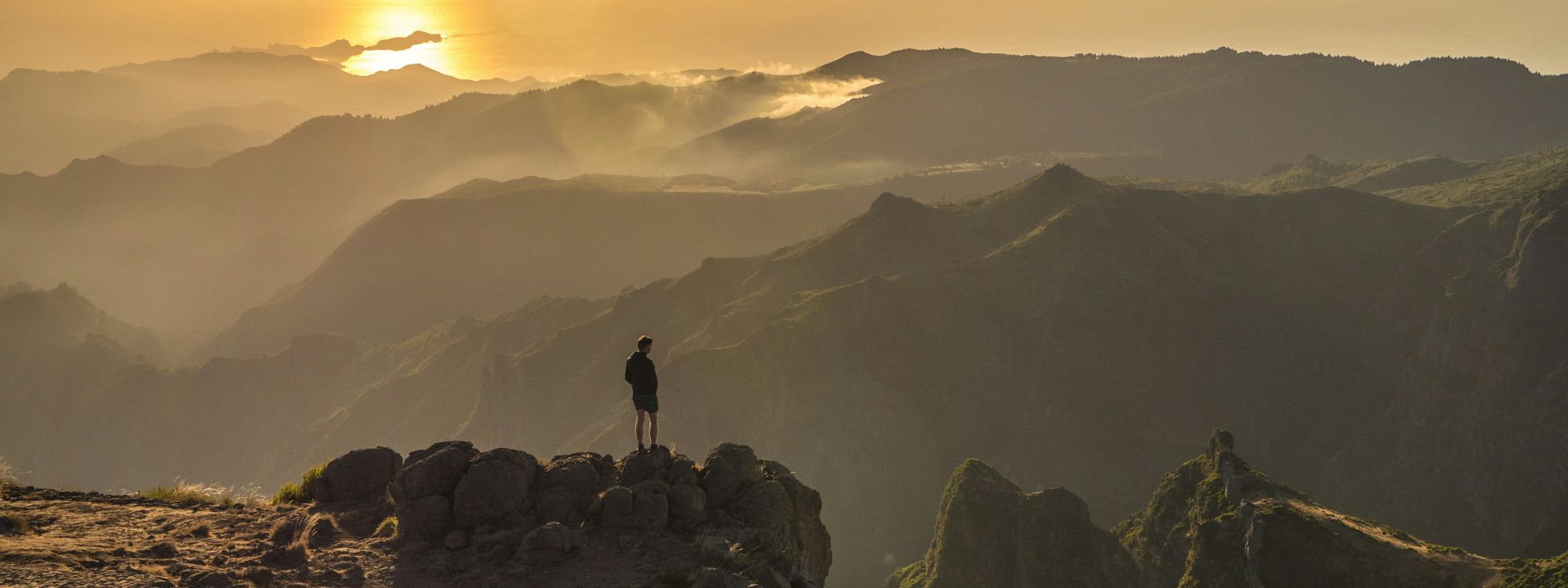
Madeira Nature: 13 Natural Wonders
Peaks above the clouds, UNESCO laurel forest, lava pools, caves and sea cliffs: the natural places to put on your Madeira itinerary.
January 28, 2020 • 7 min read
Madeira Nature: 13 Natural Wonders
Madeira nature at a glance
What makes Madeira's nature special
Madeira rose from the Atlantic as a volcano, and that origin explains its steep peaks, black rock coast, lava pools and caves. Its mountains split the island into a sunny south and a greener, mistier north. At its heart is the Laurisilva, a subtropical laurel forest inscribed as a UNESCO World Heritage site in 1999. It still covers around 15,000 hectares, about a fifth of the island. The municipality of Santana (2011) and the island of Porto Santo (2020) are also UNESCO Biosphere Reserves.
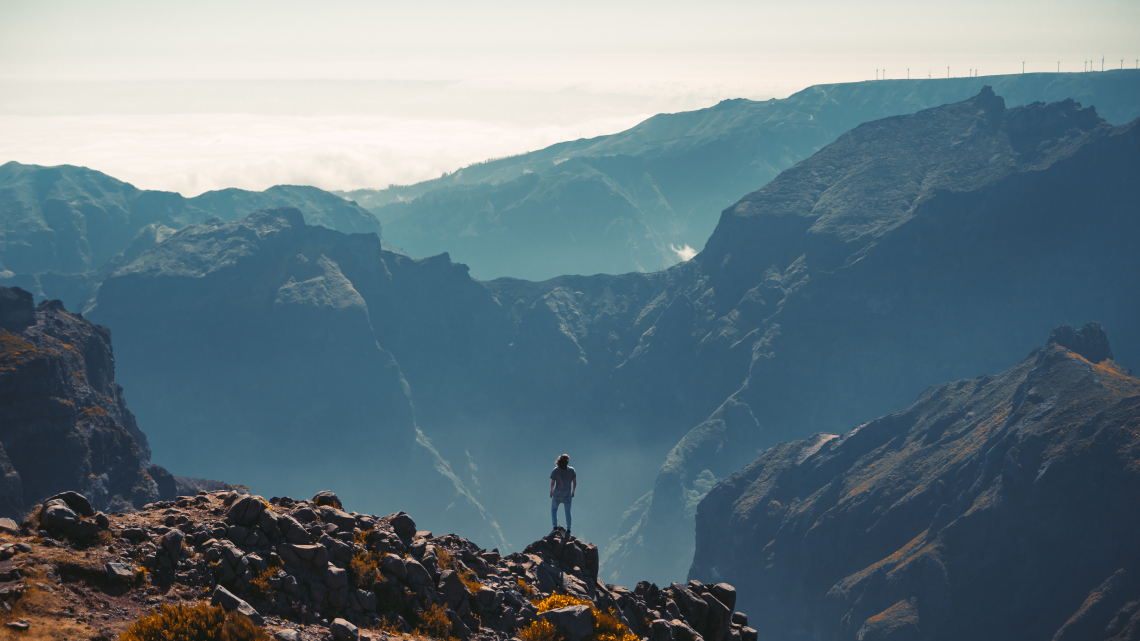
The best natural places in Madeira
1. Pico Ruivo
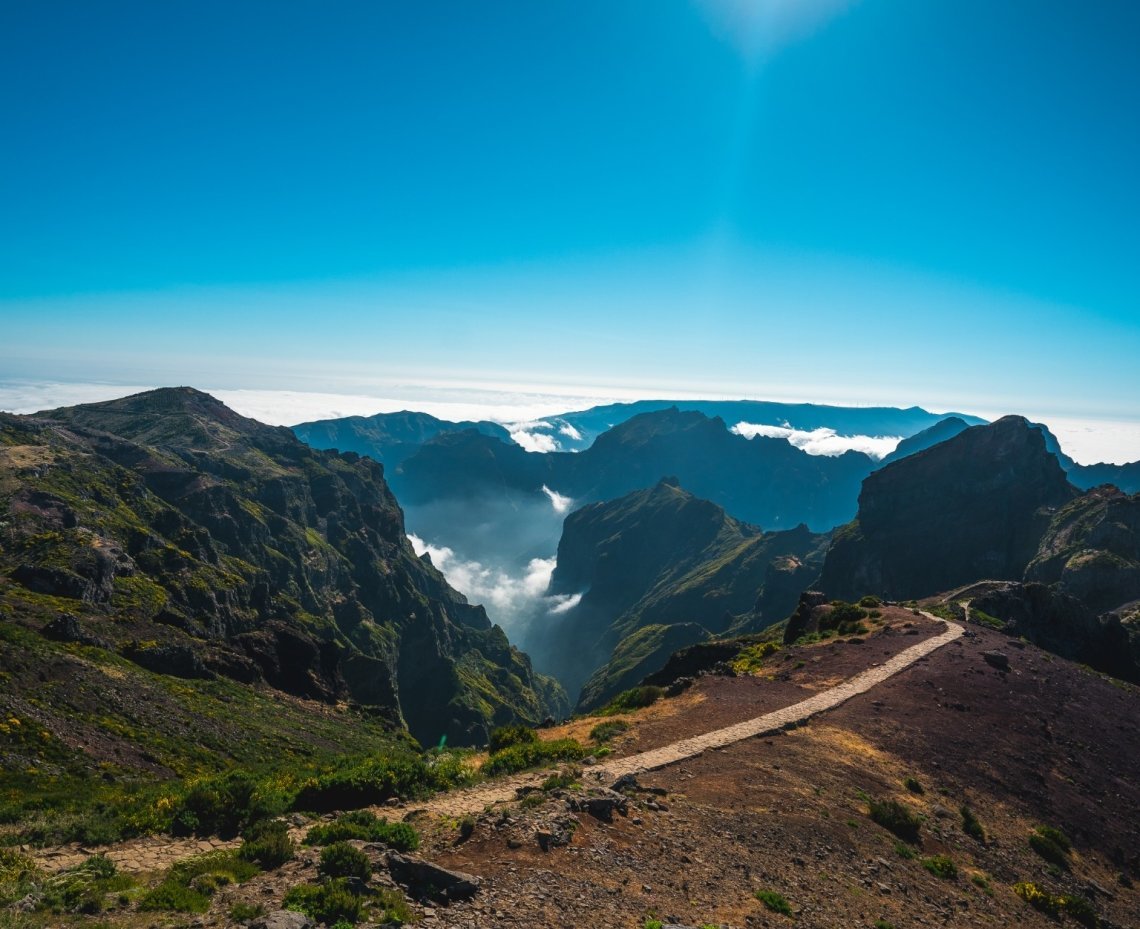
Pico Ruivo is Madeira's highest peak, reached only on foot. The shortest route starts at Achada do Teixeira, and the most famous one follows the ridge from Pico do Arieiro, though parts of that trail have been closed since the 2024 wildfire. See our guide to the best hikes in Madeira for current trail rules.
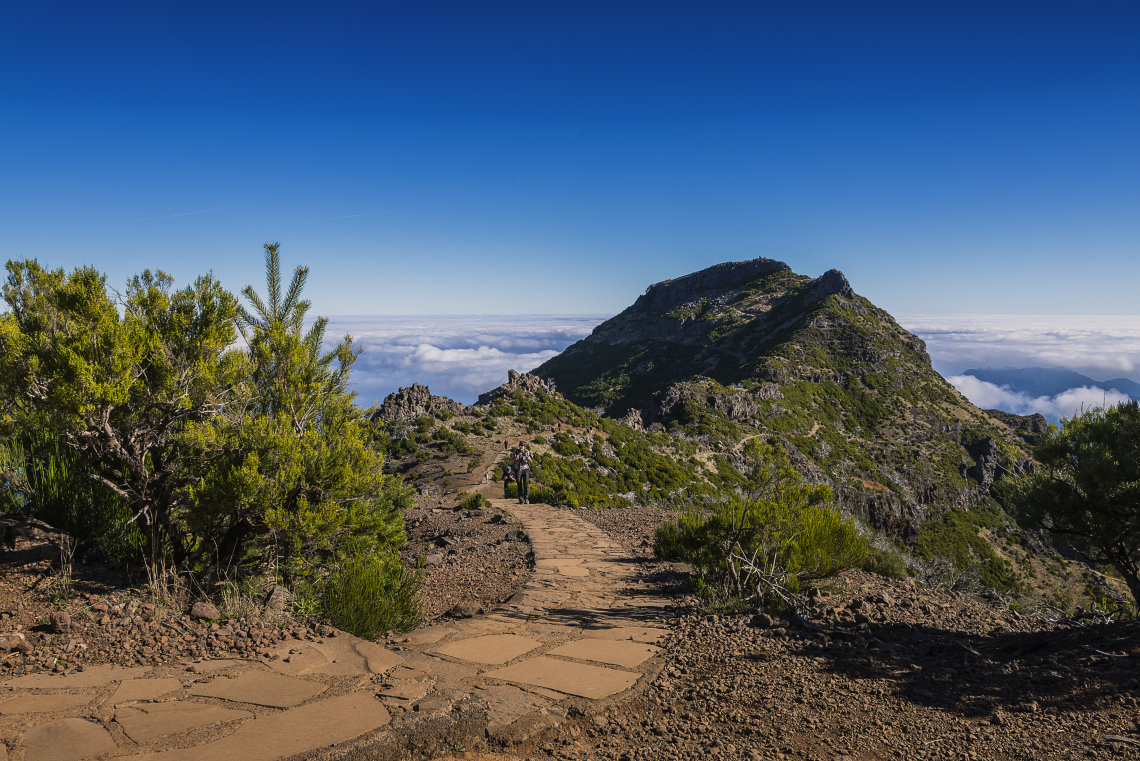
2. Pico do Arieiro
The third highest peak on the island and the easiest to reach, with a road almost to the summit. It is the classic spot for sunrise or sunset above a sea of clouds. Bring warm layers, as it is often cold and windy at the top.
3. The Laurisilva forest
Madeira's laurel forest is damp, green and very old, a type of woodland that once covered much of southern Europe. Many levada walks run through it. Ribeiro Frio, Queimadas and Rabaçal are easy places to step into the forest.
4. Fanal
On the Paul da Serra plateau, Fanal is known for its centuries-old til trees (Ocotea foetens), a native laurel species, standing on grassy slopes. On foggy days the twisted trunks make it one of the most atmospheric places on the island.
5. Cabo Girão
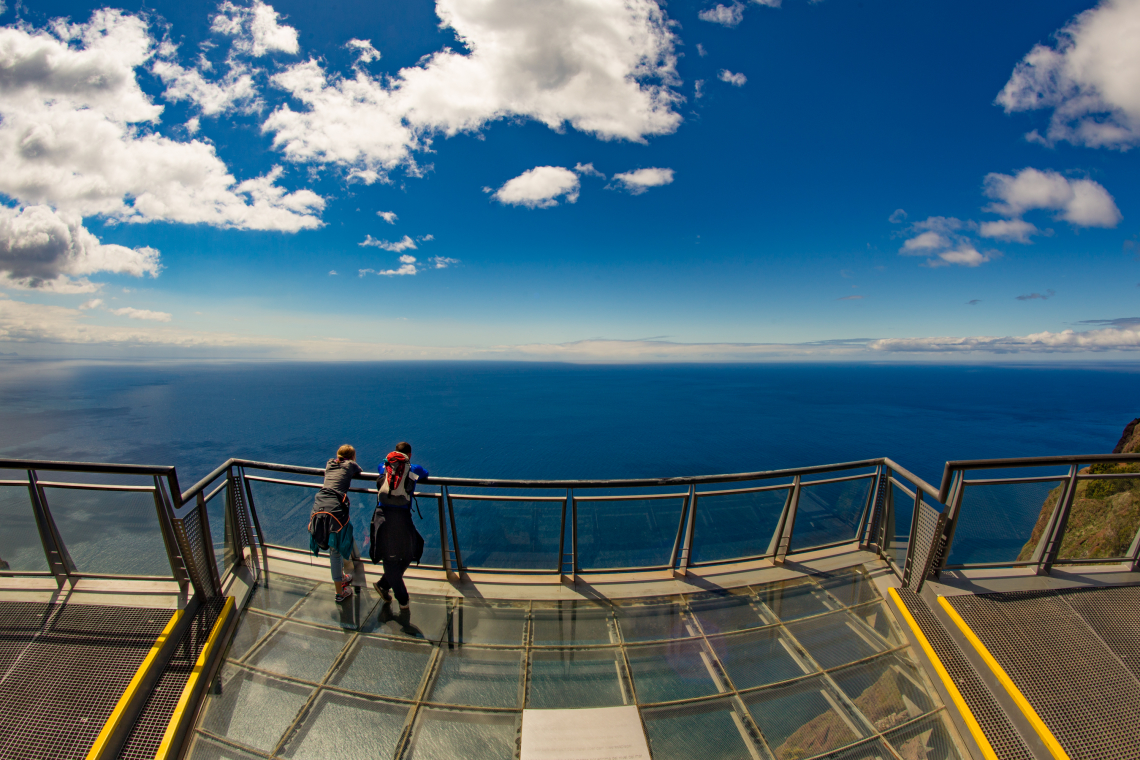
A short drive west of Funchal, Cabo Girão is a 580-meter sea cliff that Visit Madeira describes as the highest headland in Europe. A glass-floored skywalk hangs over the edge, above the terraced fields at the foot of the cliff.
6. Porto Moniz natural pools
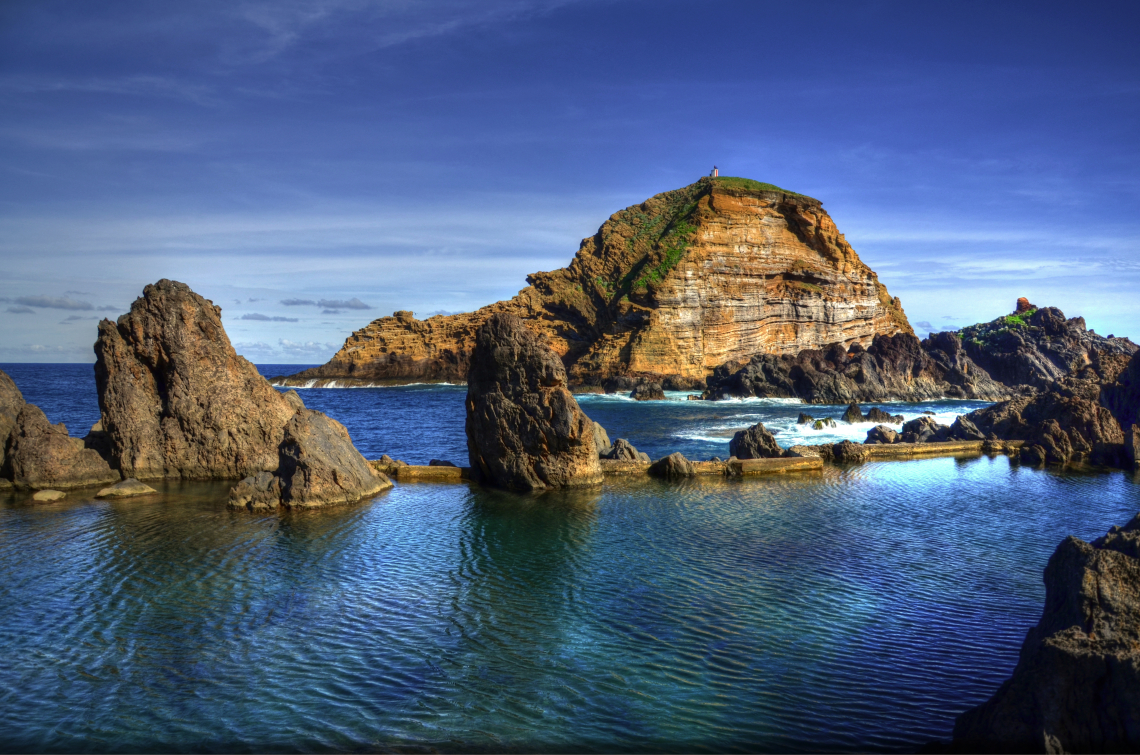
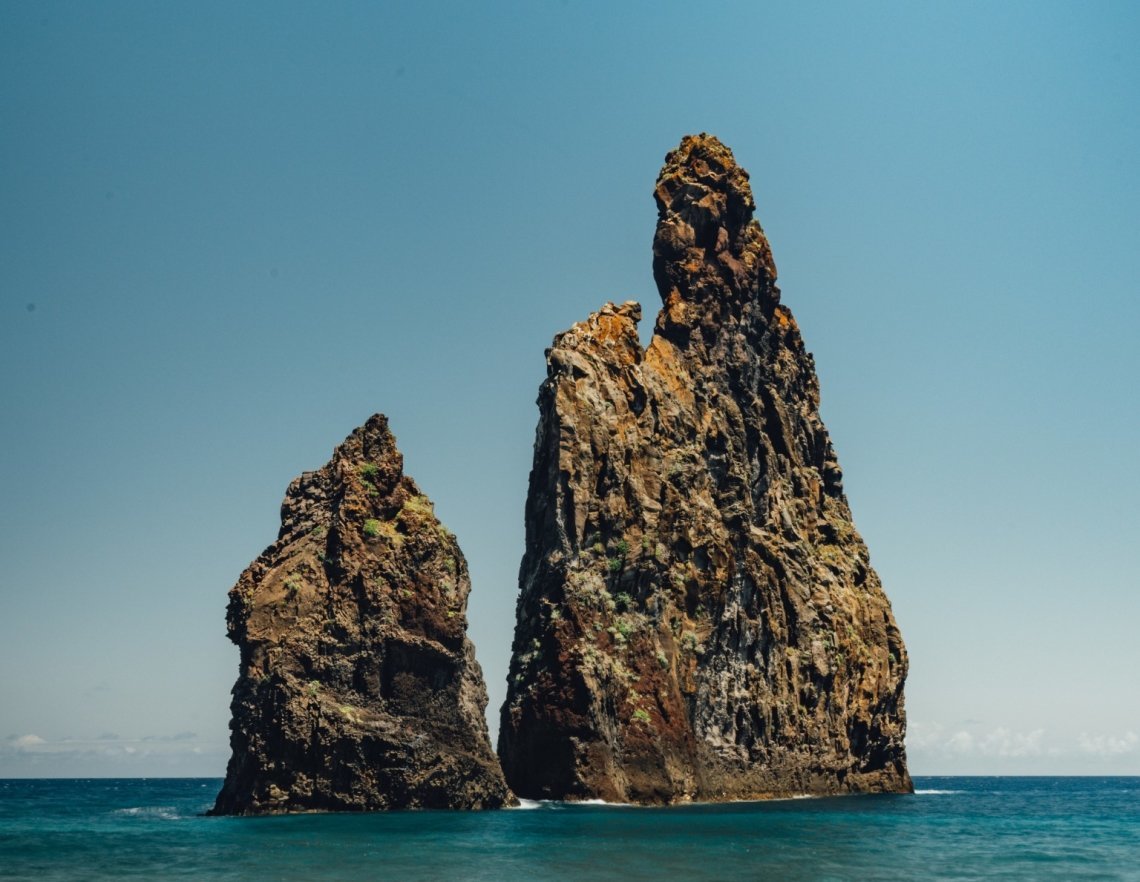
On the northwest tip of the island, volcanic rock forms sheltered pools that fill with seawater at high tide. You can swim in calm water while the Atlantic breaks just beyond. Offshore, the Ribeira da Janela islets rise from the sea, named after the window-shaped opening in one of the rocks.
7. São Vicente caves
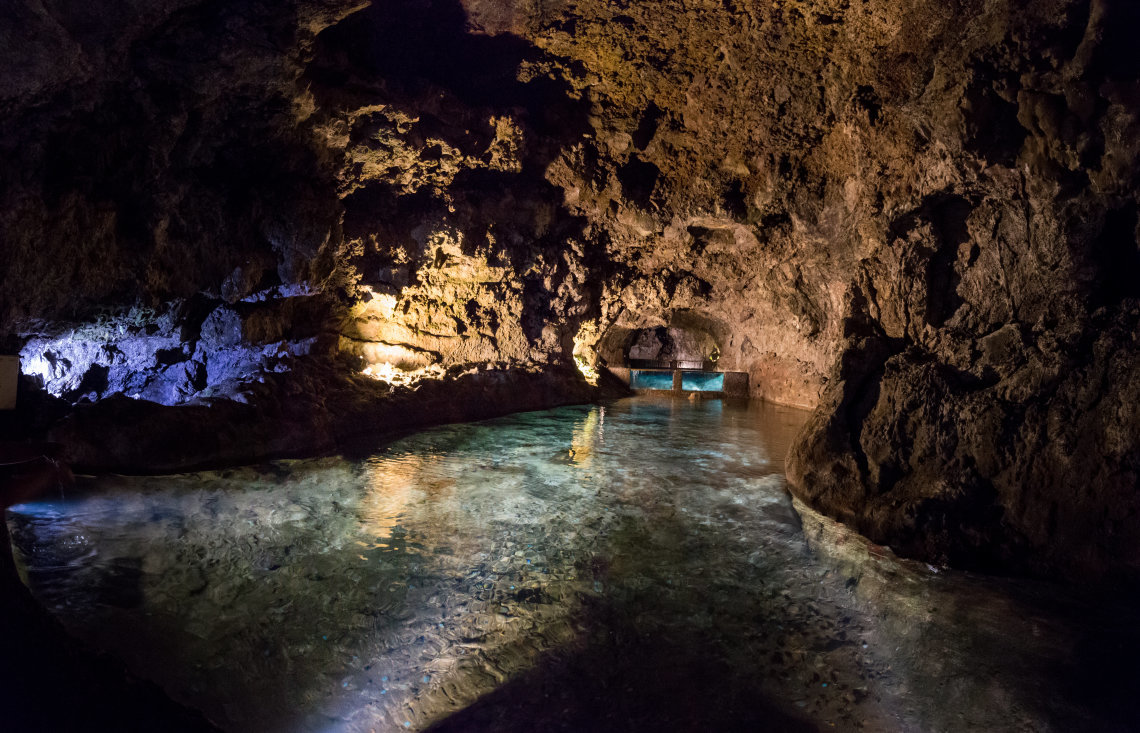
These lava tubes formed about 890,000 years ago, after an eruption on the Paul da Serra plateau. A guided route of around 700 meters leads underground, and the Volcanism Center next door explains how the island was born. Check opening times before you go, as the caves sometimes close.
8. Seixal and Véu da Noiva
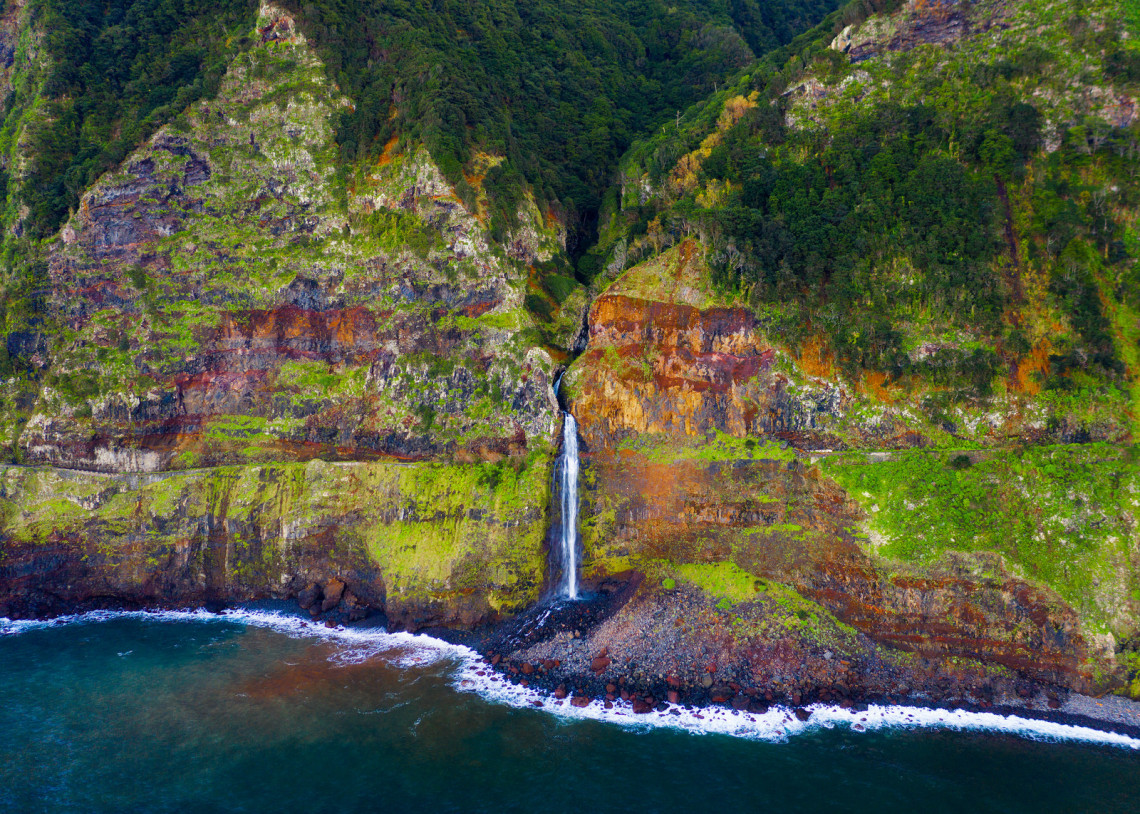
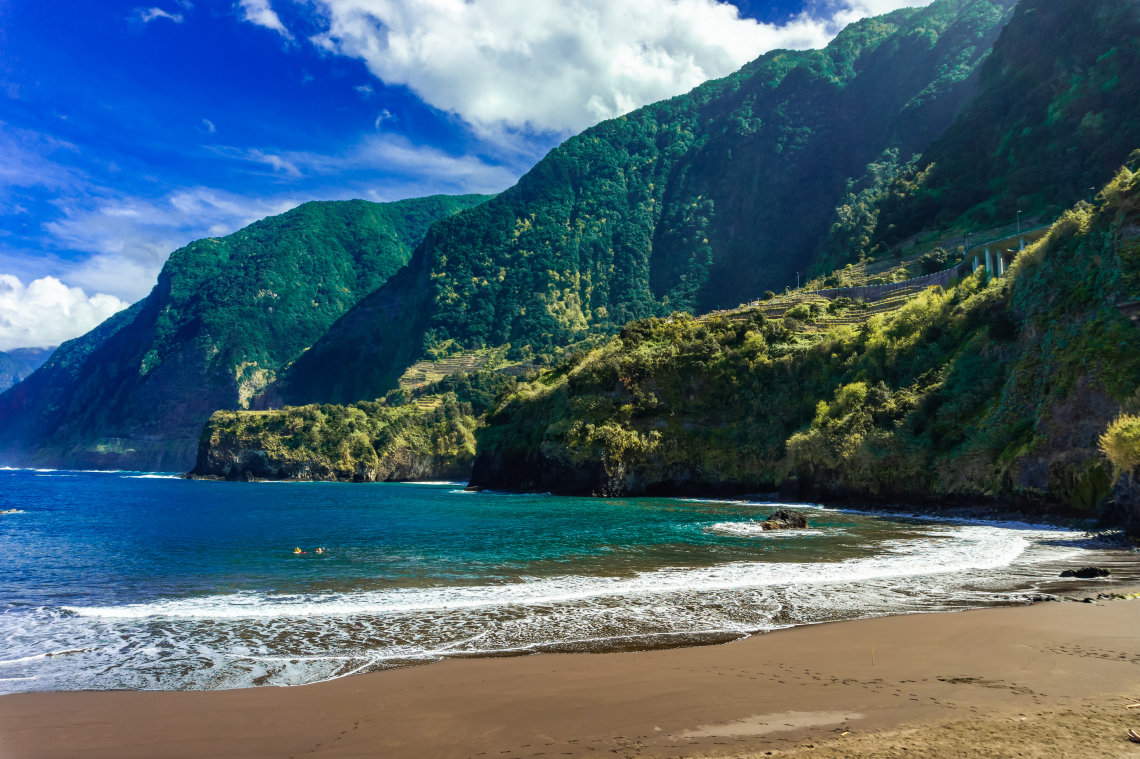
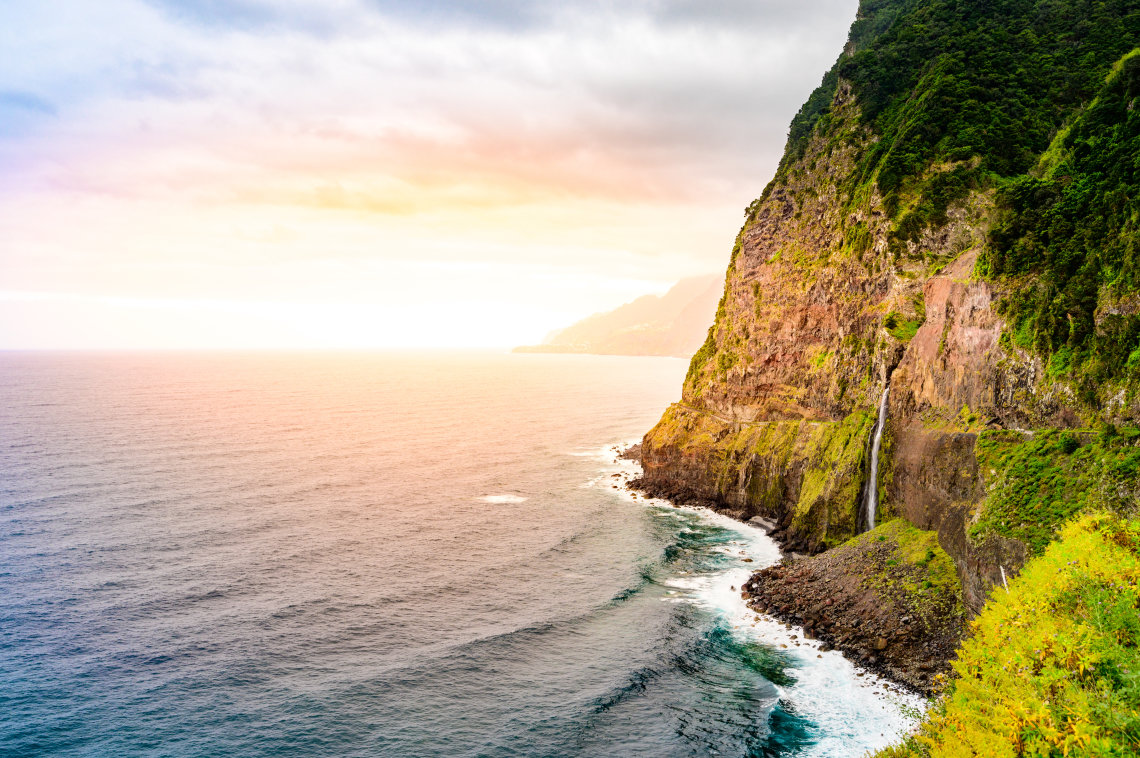
Seixal, on the north coast, has a black sand beach and natural pools below green cliffs. Nearby, the Véu da Noiva viewpoint looks over a waterfall that falls from the cliffs toward the sea, named for its resemblance to a bridal veil.
9. Ponta de São Lourenço
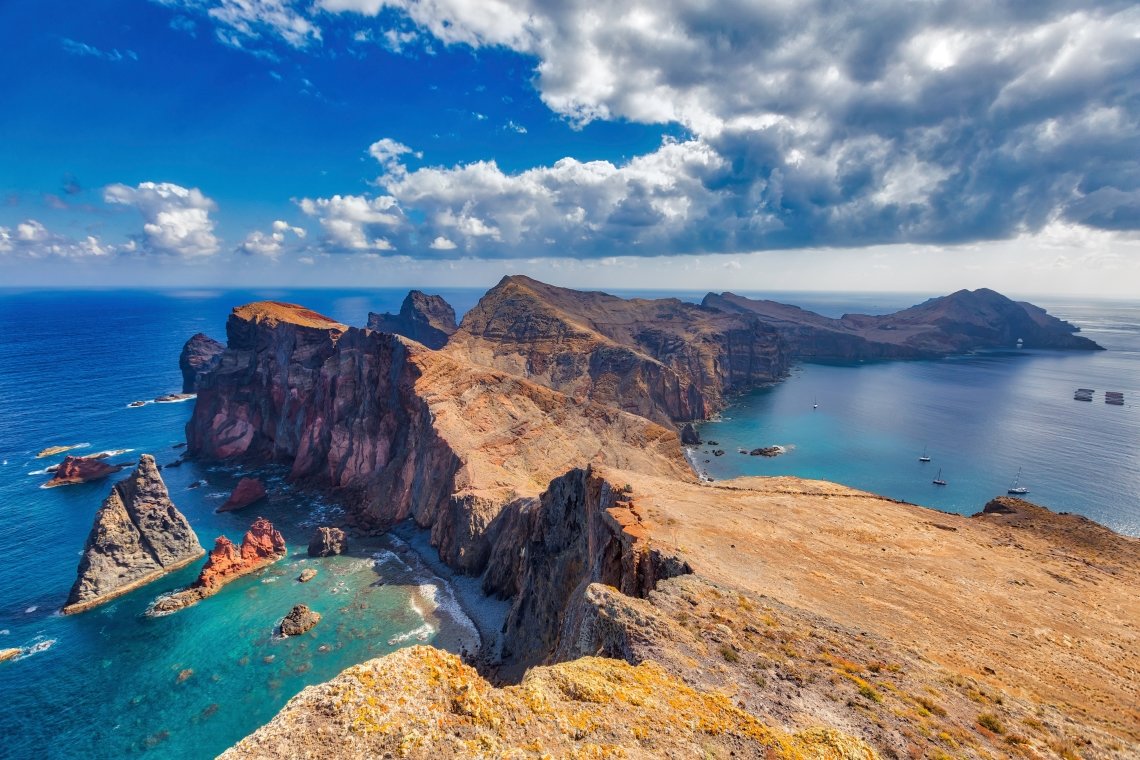
The eastern tip of Madeira is a dry, windswept peninsula of red and ochre cliffs with almost no trees, a strong contrast to the green interior. A popular trail runs along it with the ocean on both sides.
10. Curral das Freiras
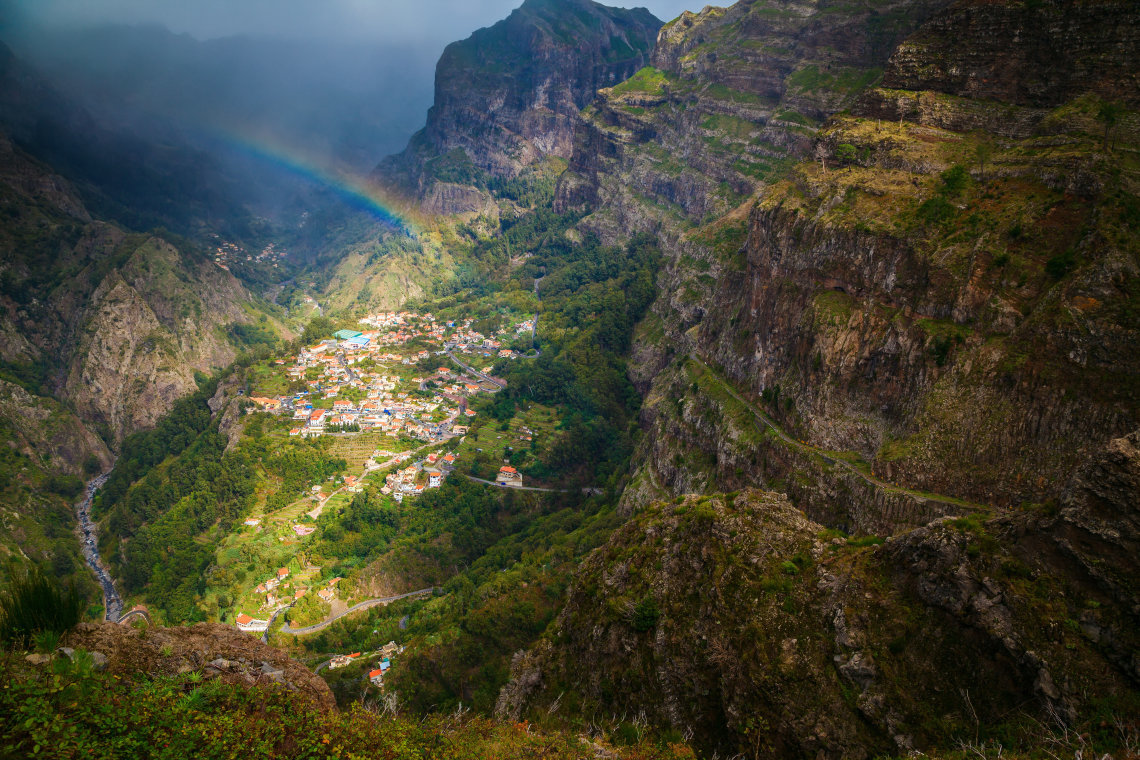
This village sits deep in a valley surrounded by mountains. Tradition says the nuns of the Santa Clara convent took refuge here from pirate attacks, which gave the place its name, the Nuns' Valley. The Eira do Serrado viewpoint looks straight down into it.
11. Santana and the north coast
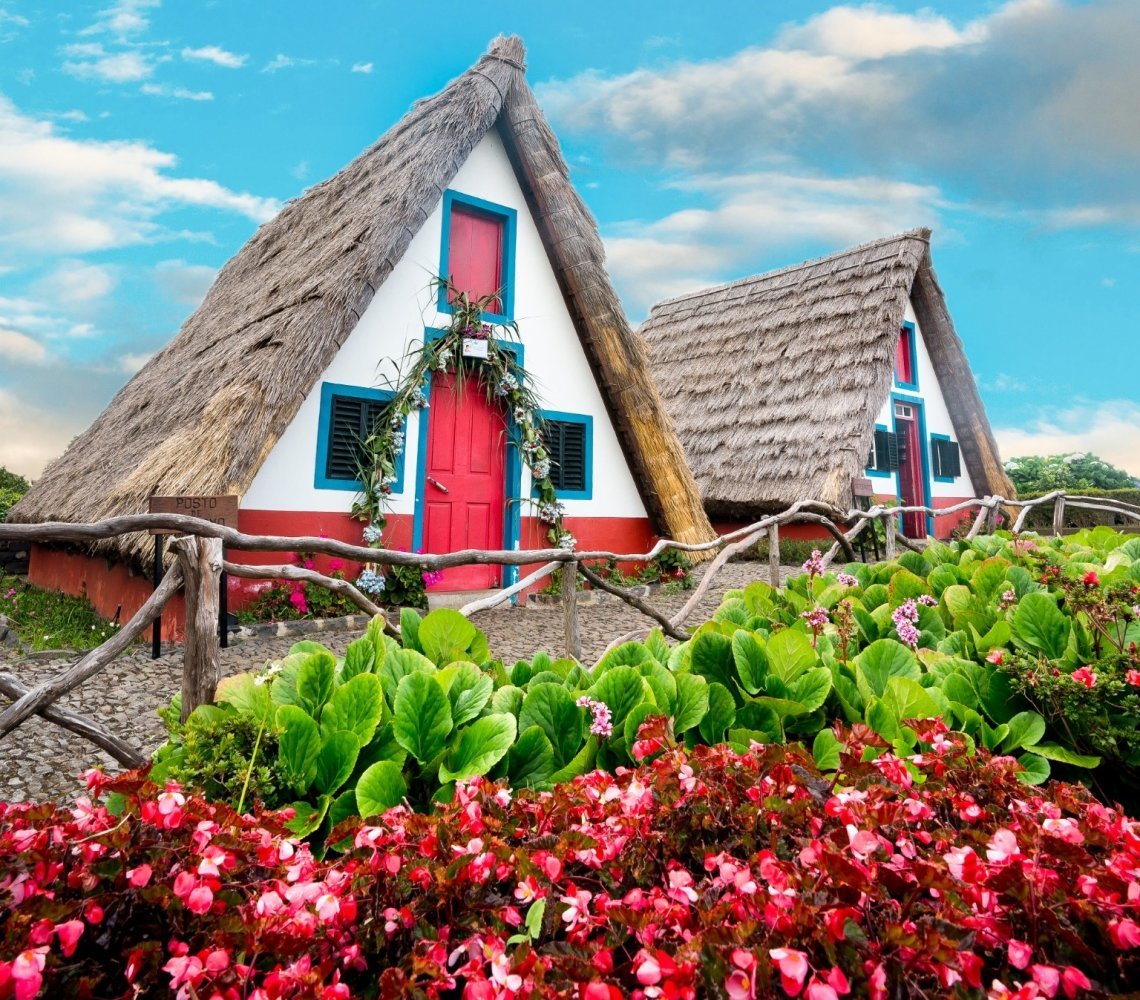
Santana, a UNESCO Biosphere Reserve, is known for its triangular thatched houses, built of stone and straw. A few are preserved for visitors. The surrounding coast mixes farmland, cliffs and forest.
12. Cascata dos Anjos
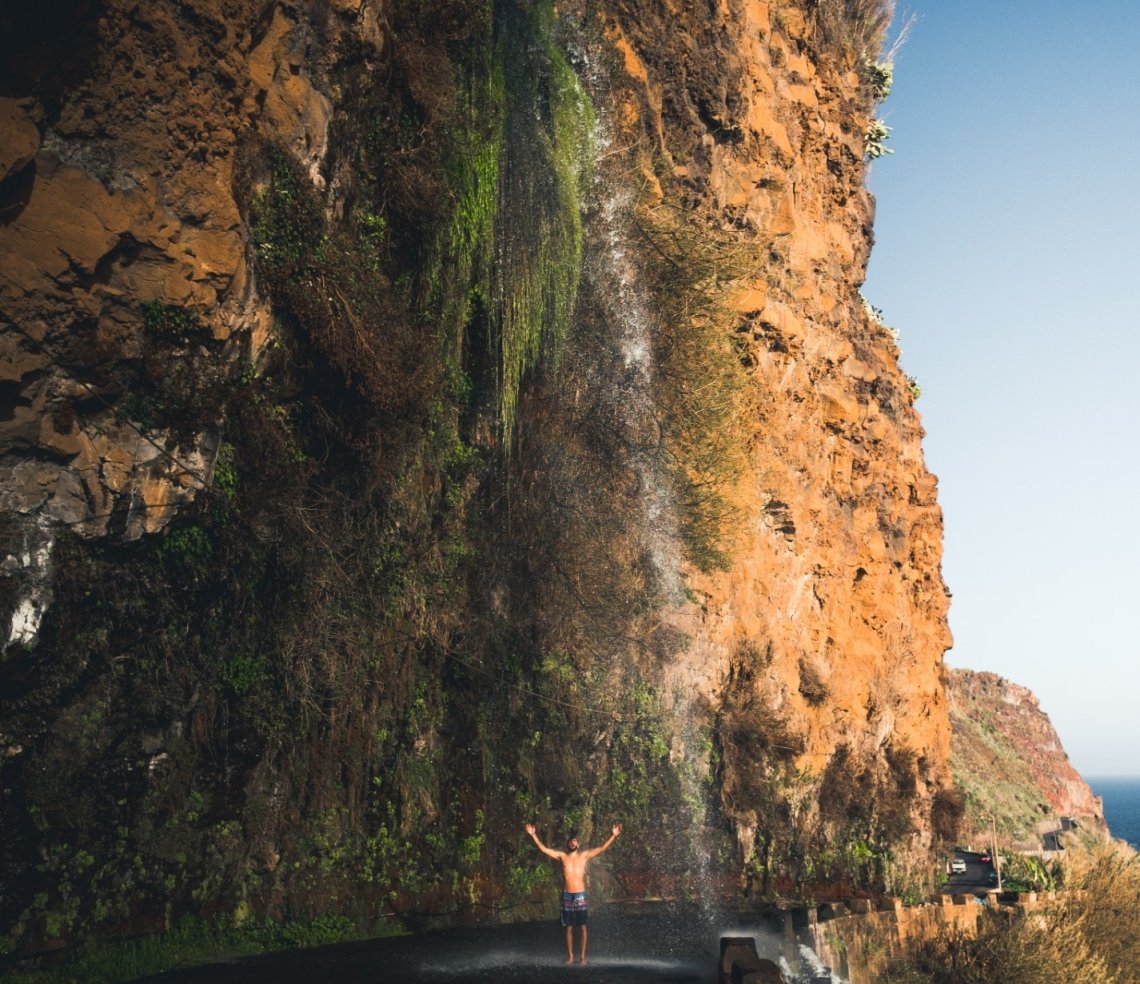
Near Ponta do Sol, this waterfall drops onto the old coastal road. Access can be restricted because of rockfall risk, so check locally and admire it from a safe distance.
13. Gardens above Funchal
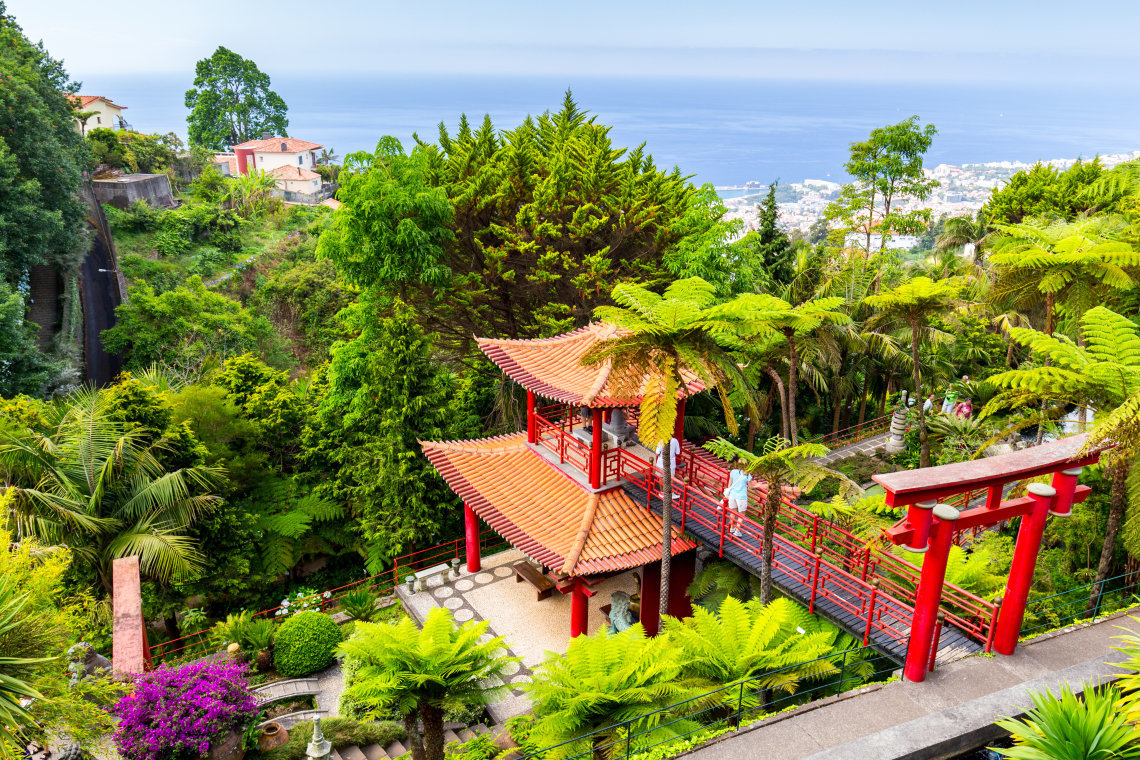
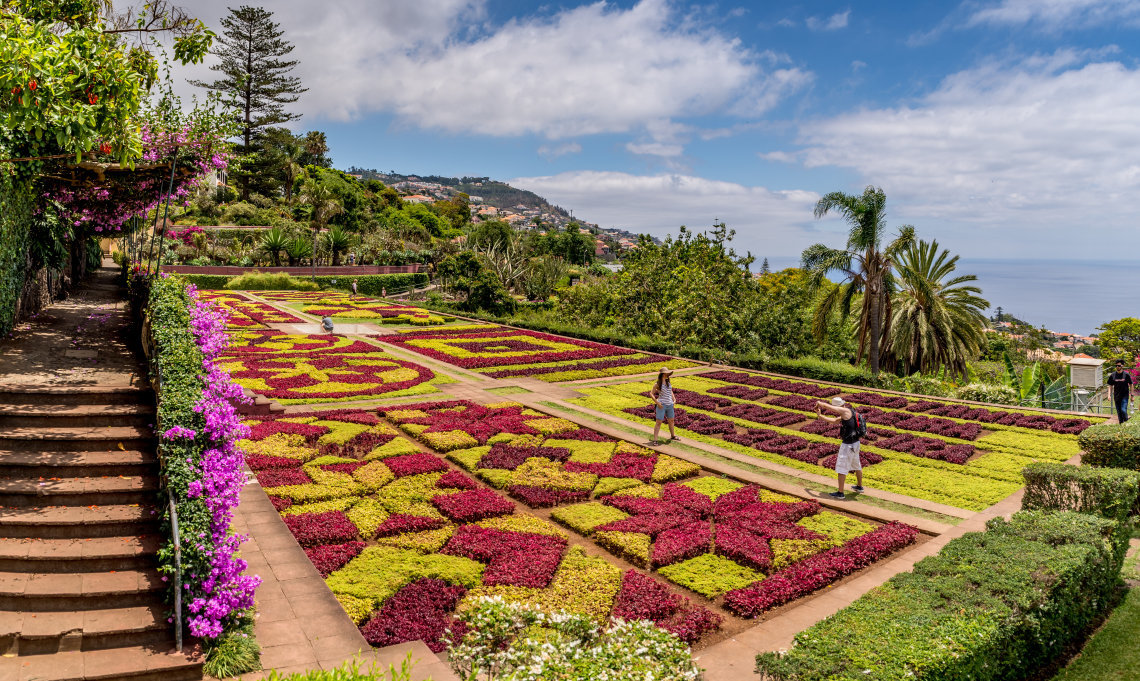
The Madeira Botanical Garden opened in 1960 on the former Reid family estate. It covers about eight hectares and holds more than 2,000 exotic plants. Higher up in Monte, the Monte Palace Tropical Garden spreads over 70,000 m² with plants from around the world, lakes, an oriental bridge and a large tile collection dating from the 15th to the 20th century.
When to see Madeira at its greenest
The landscape is greenest and the waterfalls are strongest after the wetter months from autumn to spring. Summer usually brings the clearest views from the peaks. See our month by month guide to the best time to visit Madeira.



