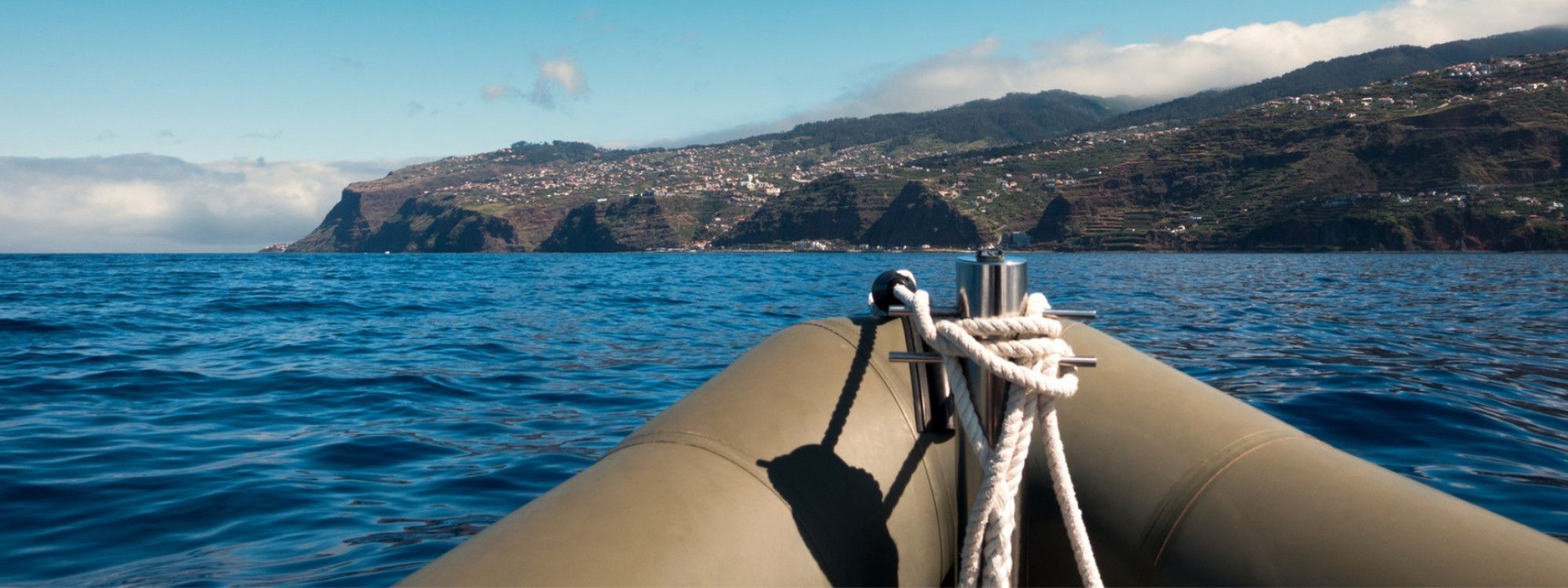
Whale Watching in Madeira: Guide
Dolphins and pilot whales all year, Bryde's whales in summer and deep water close to shore: when to go, what you can see and how to choose a tour.
January 28, 2020 • 4 min read
Whale Watching in Madeira: Guide
Whale watching in Madeira at a glance
Why Madeira is so good for whale watching
About 5 km off the coast, the ocean floor drops to more than 3,000 meters. Steep slopes and underwater canyons bring deep-water species close to shore, so boats do not need to travel far. In October 2023, the World Cetacean Alliance named Madeira a Whale Heritage Area, a title shared at the time with only nine other destinations worldwide. The label recognizes places where whale watching is run responsibly.
What you can see
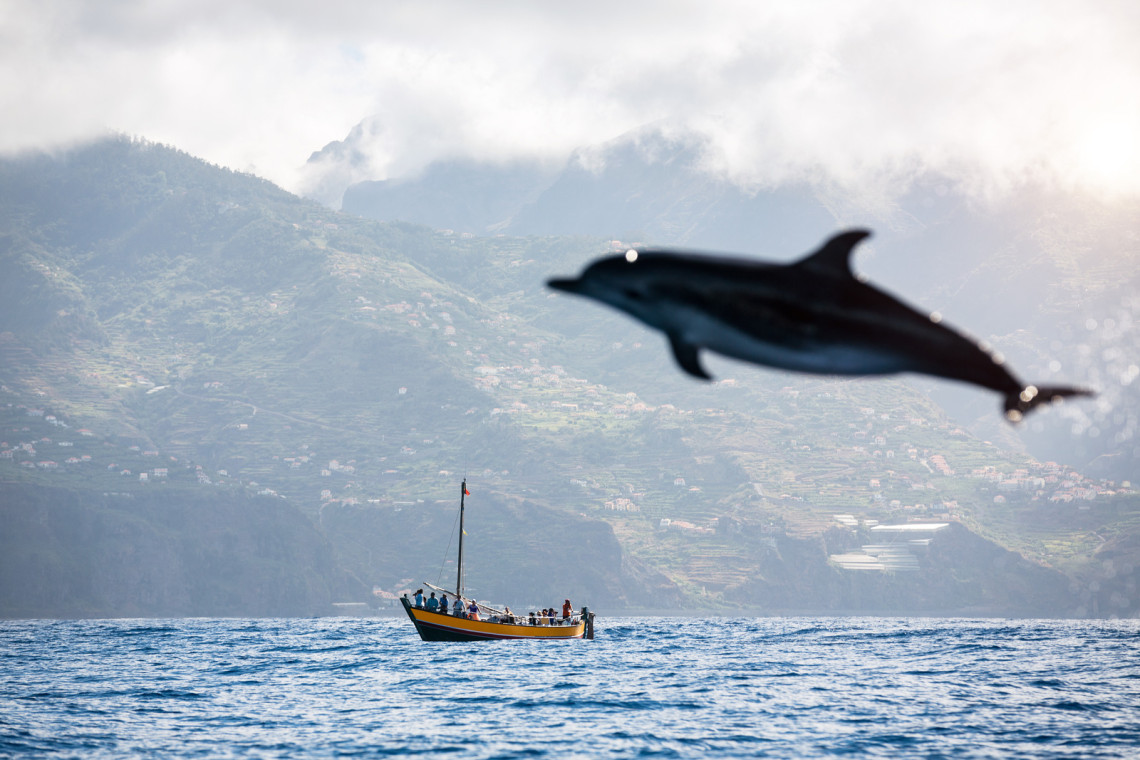
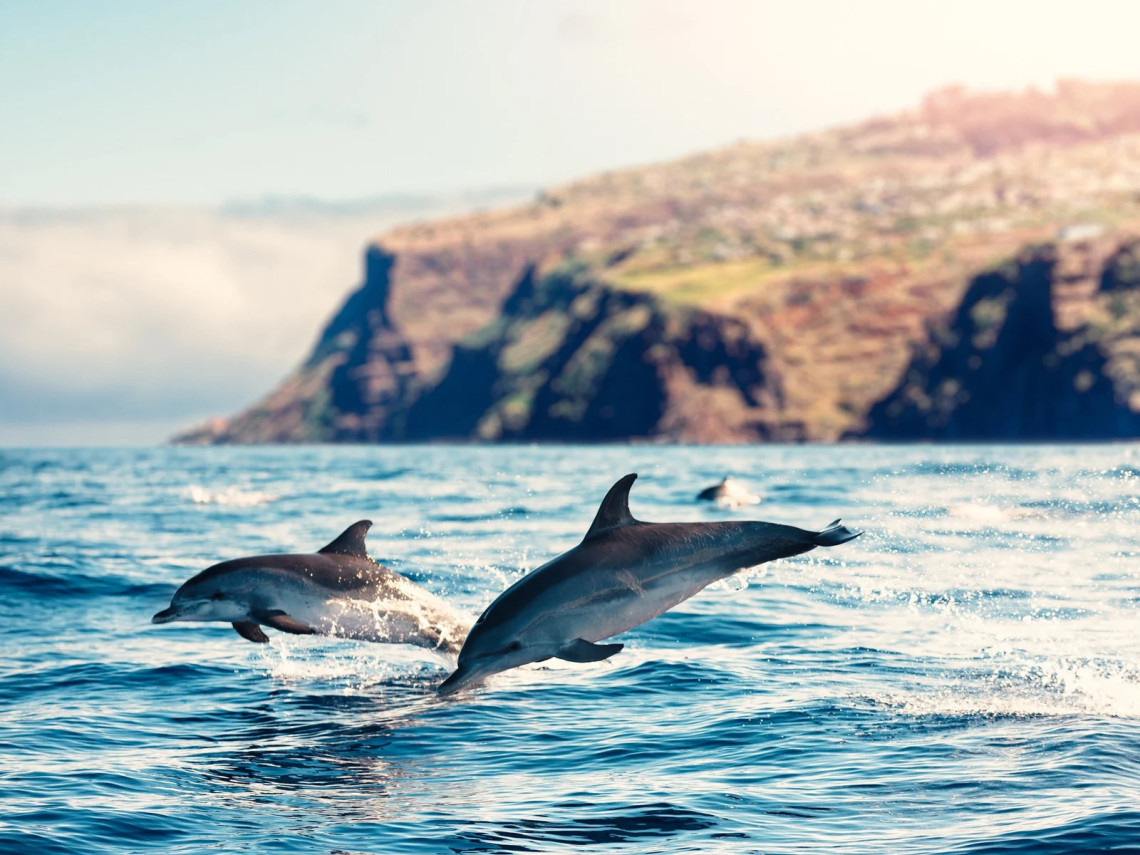
- Dolphins: bottlenose dolphins all year, plus common and Atlantic spotted dolphins, often in large groups.
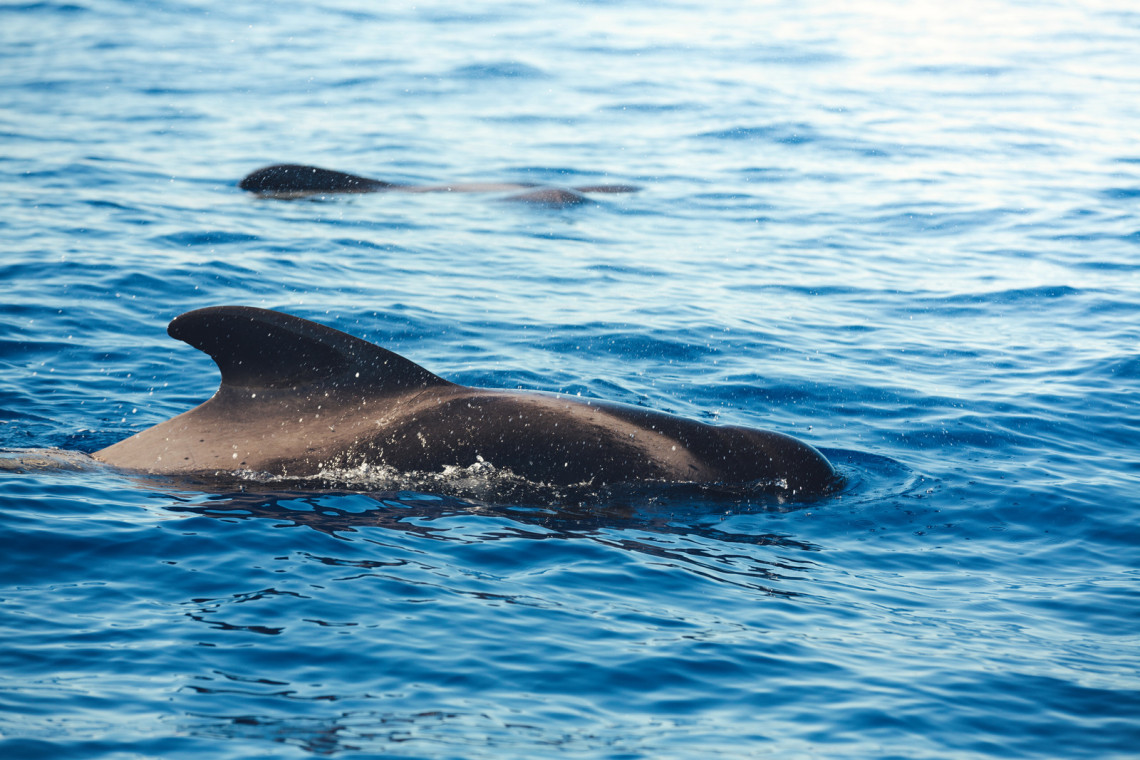
- Resident whales: short-finned pilot whales and sperm whales can be seen throughout the year.
- Seasonal whales: Bryde's whales are frequent in summer. Fin, sei, humpback and blue whales are less common but possible.
- Orcas: rare, with occasional sightings.
Researchers at the ECHO project, which studies cetaceans in Madeira, note that some species show signs of residency while others follow clear seasonal patterns.
Best time to go whale watching in Madeira
You can go any month, which is one of Madeira's advantages over many other destinations. Spring to autumn brings the widest variety of species and usually calmer seas, and summer is the best time for Bryde's whales. In winter there are fewer boats and rougher days, but dolphins and resident whales are still around. Morning trips often have the flattest water.
Where tours leave from
Most operators sail from the Funchal marina, which has the most departures. A few smaller operators work from Calheta in the west and Machico in the east. Check whether hotel pickup is included if you are staying outside Funchal.
What a tour is like
After a short safety briefing, the boat heads to deeper water while the crew looks for blows, fins and splashes, sometimes helped by spotters on land. When animals are found, the boat slows down, keeps its distance and lets them come closer if they want. Bring a windproof layer, sunscreen, a hat and a camera, and take motion sickness precautions if you need them.
Responsible whale watching
Good operators approach slowly, limit time with each group of animals and never chase or surround them. Ask how the company follows local whale watching rules before you book. Sightings are never guaranteed with wild animals, so ask about the sighting policy too.