Updated October 2026 • 7 min read
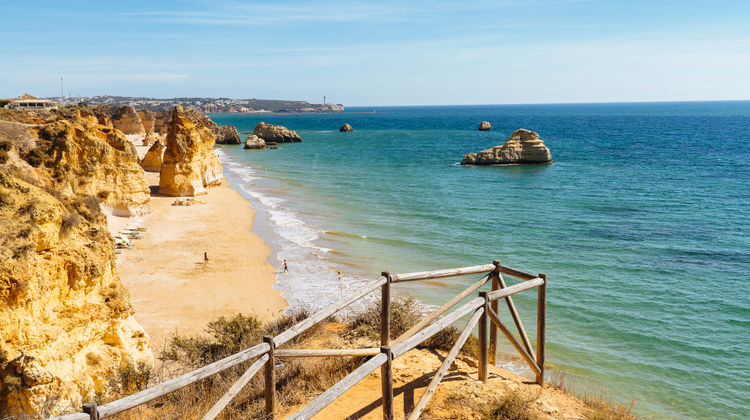
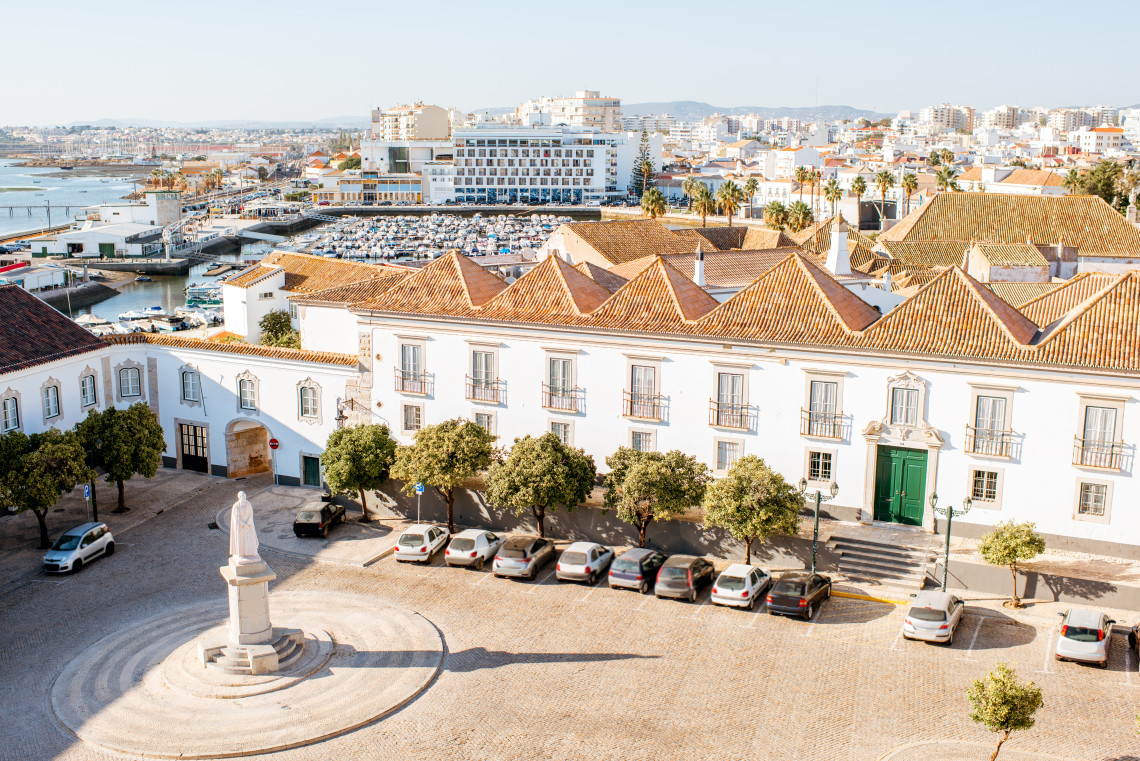
Faro is the capital of the Algarve and the home of its main airport. Most visitors pass straight through, but the city is worth a day or two: a walled Old Town entered through the Arco da Vila, a cathedral with views over the lagoon from its bell tower, the Bone Chapel of the Carmo Church and boat trips to the beaches of the Ria Formosa islands. It is also the easiest base in the Algarve without a car.
This guide covers what to see in Faro, the island beaches, day trips, where to stay and when to go.
Faro at a Glance
| Details | |
|---|---|
| What it is | Capital of the Algarve and of the Faro district |
| Best for | City breaks, history, the Ria Formosa, travelling without a car |
| Don't miss | Old Town, Sé Cathedral tower, Bone Chapel, a Ria Formosa boat trip |
| How long | One full day for the city, two or three with the islands and day trips |
| Getting there | Faro Airport, plus the city's train and bus stations |
Is Faro Worth Visiting?
Yes, for a day or two, and more if you like history, nature and a lived-in Portuguese city. Faro has a compact historic centre, a lagoon with island beaches on its doorstep and the best train and bus connections in the Algarve. It is less suited to a long beach holiday: the city faces the lagoon rather than the open sea, and the nearest beaches are a bus or boat ride away. If beach time is the priority, stay in Albufeira, Lagos or the resorts west of Faro and visit the city on a day trip.
Things to Do in Faro
1. Walk the Old Town (Cidade Velha)
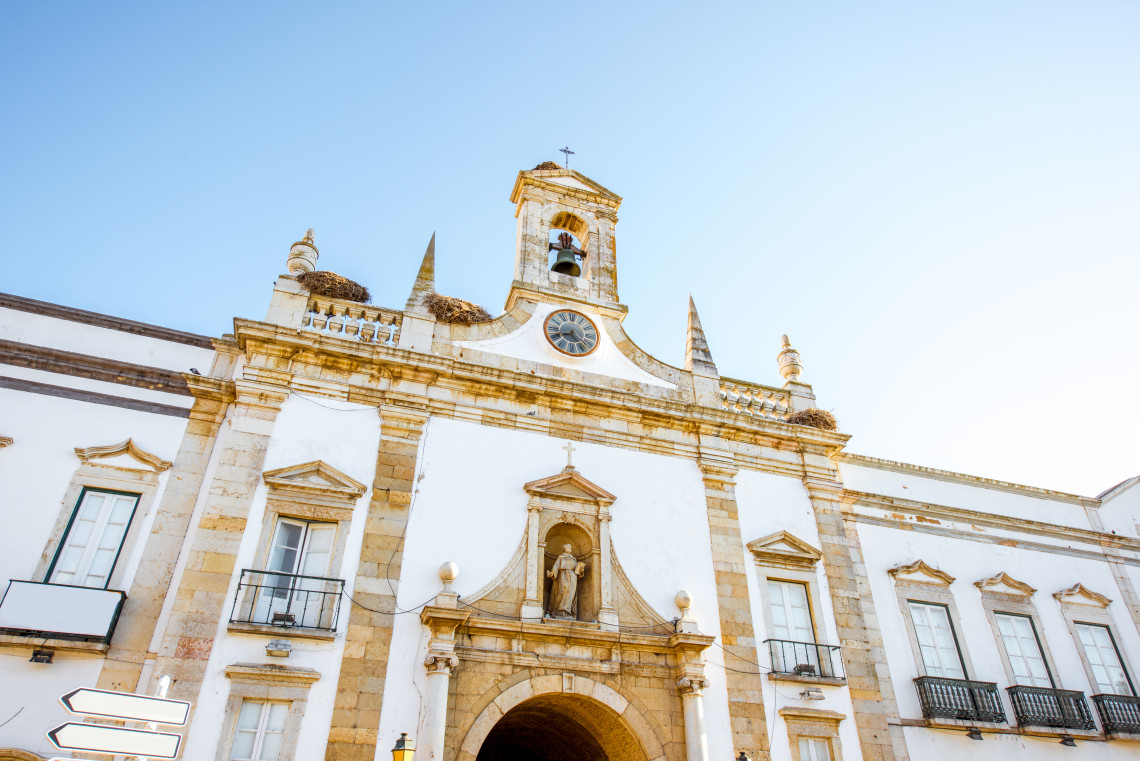
The Old Town is a small walled quarter of cobbled streets on the edge of the lagoon. Most visitors enter through the Arco da Vila, a gate rebuilt after the 1755 earthquake, with a statue of Saint Thomas Aquinas, the city's patron saint, above the arch. White storks nest on the gate and on rooftops across the Old Town. Some of the towers in the walls date back to the Byzantine period, and the tourist office sits beside the arch.
2. Climb the tower of the Sé Cathedral
The cathedral stands on the square at the centre of the Old Town. Its origins go back to the 13th century, after the Christian reconquest, and the building mixes Gothic, Renaissance and Baroque work after centuries of rebuilding. Climb the 68 steps of the bell tower for views over the rooftops, the salt marshes and the Ria Formosa.
3. See the Bone Chapel at the Carmo Church
The Igreja do Carmo, a Baroque church from the 18th century, is outside the walls in the newer part of town. Behind it is the Capela dos Ossos, a small chapel consecrated in 1816 and lined with the bones of more than 1,000 Carmelite friars, including 1,245 skulls. An inscription above the entrance invites visitors to stop and reflect that they will reach the same state one day.
4. Visit the Municipal Museum
The Museu Municipal de Faro occupies the former Convent of Nossa Senhora da Assunção in the Old Town, built in the early 16th century around a two-storey cloister. Its collection includes Roman mosaics from Ossonoba, the Roman city on the site of Faro, and statues from the Roman villa at Milreu.
5. Take a boat into the Ria Formosa
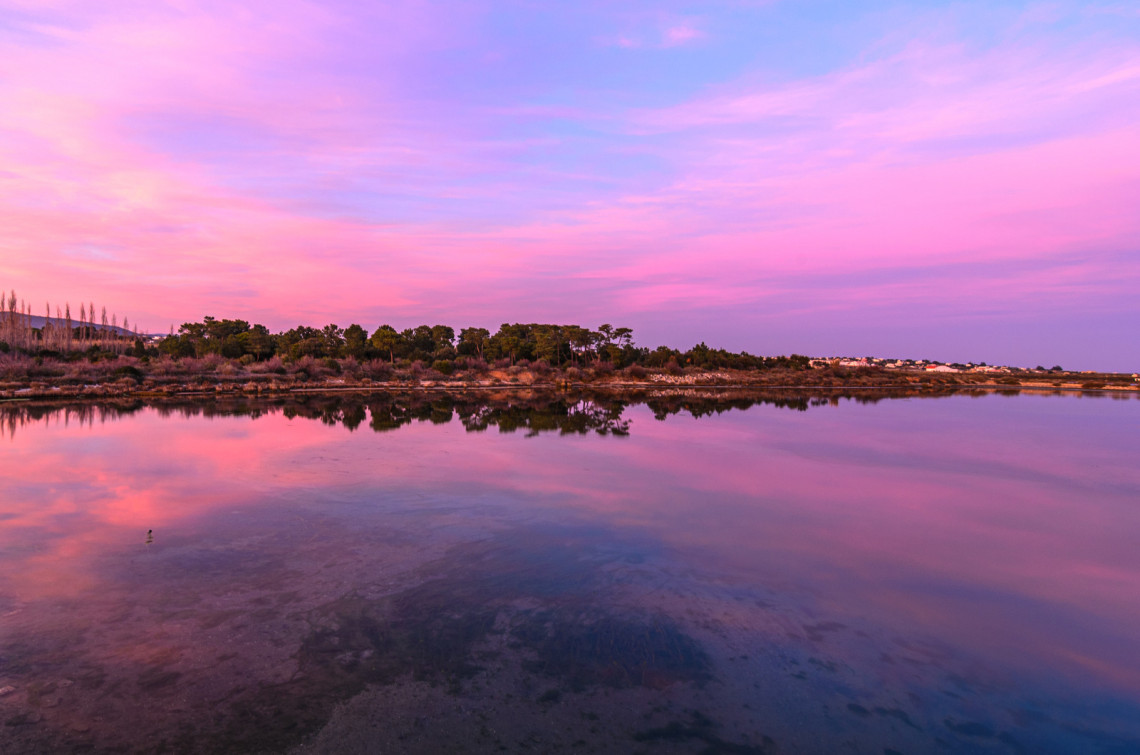
The Ria Formosa Natural Park is a protected lagoon of channels, salt marshes and barrier islands that stretches along the coast on both sides of Faro. Boat trips leave from Faro's waterfront and marina to the islands of Deserta (Barreta) and Culatra, and some tours focus on birdlife, with flamingos and spoonbills among the species seen in the lagoon.
RIA FORMOSA SPEED BOAT FROM FARO
A 2-hour speed boat tour from Faro Marina through the channels of the Ria Formosa Natural Park.
See the speed boat tour →More Ria Formosa trips
6. Go to the beach
Faro's own beach, Praia de Faro, is on a sand spit about 7 km from the centre, reached by road across a bridge, with sand on both the ocean and the lagoon side. For quieter sand, take a boat to Ilha Deserta or Culatra, where long Atlantic beaches back onto the lagoon.
7. Visit Milreu and Estoi
The Roman ruins of Milreu, about 9 km north of Faro, are the remains of a large villa with mosaics and the walls of a temple. A short distance away, in the village of Estoi, the pink 19th-century Palácio de Estoi has formal gardens and is now a Pousada hotel. The two make an easy half-day by car or taxi.
8. Stroll the downtown and the marina
Outside the walls, the pedestrian streets of the downtown, around Rua de Santo António, are lined with shops, cafés and restaurants. The small marina and the Manuel Bívar garden next to it are the meeting point of the city, and a good place to start or end the day.
Day Trips from Faro
Faro has the best transport links in the Algarve, so it works well as a base:
- Olhão: about 10 minutes by train, with riverside market halls and ferries to Armona and Culatra.
- Tavira: 30 to 35 minutes by train, for the old town on the Gilão river and Ilha de Tavira.
- Loulé: an inland market town, about 40 minutes by bus.
- Vila Real de Santo António and Ayamonte: about an hour by train, with a ferry across the Guadiana to Spain.
- Seville: roughly 2 to 2.5 hours by road, best on a full-day tour.
SEVILLE FULL-DAY TOUR
A full-day guided trip across the border to Seville, with Maria Luisa Park, Plaza de España and free time in the old town. Pick-up available between Monte Gordo and Quarteira.
See the Seville tour →More from Faro
Where to Stay in Faro
For walking access to the Old Town, the marina and the train station, stay in the centre. For a quicker airport transfer or a view of the lagoon, look at hotels on the edge of town.
Hotels in Faro
How to Get to Faro
- By plane: Faro Airport is the main airport of the Algarve and sits a few kilometres west of the city centre, linked by bus and taxi.
- By train: Faro station is on the line from Lisbon and on the regional Algarve line, which runs west to Lagos and east to Vila Real de Santo António.
- By car: the A22 motorway runs along the Algarve and has had no tolls since 2025. The A2 from Lisbon joins it north of Albufeira.
Best Time to Visit Faro
- April to June and September to October: warm days, fewer crowds and good conditions for walking the Old Town and boat trips in the lagoon.
- July and August: hottest months and busiest at the island beaches. Book boat trips ahead.
- November to March: mild and quiet, a good time for a city break, though some island ferries run fewer departures.
Plan your Algarve trip
ALGARVE ESSENTIAL PACKAGE
Flights, hotel and airport transfers in the Algarve, with time to spend a day in Faro's Old Town and on the Ria Formosa.
See the Algarve package →Plan it your way
Custom Your Trip
Tell our local travel advisors which towns, dates and experiences you want and we build the Algarve trip around you, a few days in Faro included.
Start your custom trip →Limited time
Portugal Packages On Sale
Flights, hotels and rental car bundled at reduced prices. See every package currently on sale and book while it lasts.
Book now →Frequently Asked Questions
Is Faro worth visiting?
Yes. Faro has a walled Old Town, a cathedral with views over the lagoon, the Bone Chapel and boat trips to the Ria Formosa islands. One or two days is enough for most visitors.
What is the capital of the Algarve?
Faro is the capital of the Algarve and of the Faro district, and has been the region's administrative seat since 1756.
How many days do you need in Faro?
One full day covers the Old Town, the cathedral, the Bone Chapel and the marina. Add a second day for a Ria Formosa boat trip or the beaches on the islands.
Does Faro have a beach?
Yes. Praia de Faro is on a sand spit about 7 km from the centre, reached by bridge. Ilha Deserta and Culatra have quieter beaches reached by boat.
Is Faro a good base for exploring the Algarve?
It is the best base without a car, with trains east to Olhão, Tavira and Vila Real de Santo António and west to Albufeira, Portimão and Lagos. For beach holidays, the resorts further west are closer to the sand.
How far is Faro Airport from the city?
The airport is a few kilometres west of the centre, connected by bus and taxi.
.jpg "Castelo Beach Algarve – Golden Sand Beach in Southern Portugal")