Book with an Expert (857) 239-0784
Douro Valley: Port Wine Region Guide

Douro Valley: Port Wine Region Guide

The Douro Valley wine region near Porto: how far it is, how to get there, the best towns and quintas, its three sub-regions, the wines and when to go.

TC
Tiago C.

February 6, 2023 • 6 min read

Douro Valley: Port Wine Region Guide

✈️ THE SHORT VERSION

The Douro Valley is the wine region east of Porto where port is made. It was the world's first demarcated wine region, in 1756, and its terraced vineyards are a UNESCO World Heritage Site. Peso da Régua, the gateway, is about 100 km from Porto and around two hours by train, and Pinhão, at the heart of port country, is a little further. Visit the quintas for tastings, ride the Douro line along the river and, if you can, stay a night.

This guide covers where the Douro Valley is, how to get there, its sub-regions, the towns and quintas to visit, the wines and the best time to go.

The Douro Valley at a Glance

FactDetail
WhereNorthern Portugal, along the Douro River, east of Porto
Distance from PortoAbout 100 km to Peso da Régua
Travel timeAbout 2 hours by train to Régua, a little more to Pinhão
Known forPort wine, Douro DOC reds and whites, terraced vineyards
Demarcated1756, the world's first demarcated wine region
UNESCOWorld Heritage Site since 2001, as the Alto Douro Wine Region
Main townsPeso da Régua, Pinhão, Lamego
Best time to visitSeptember and October for the harvest, spring for green vines

Why the Douro Is Special

The Douro was the first wine region in the world to be formally demarcated, by a royal charter of September 10, 1756, to protect the quality of port. Over the centuries, the steep valley sides were cut into terraces by hand, creating the landscape UNESCO listed in 2001. The listed area alone covers about 24,600 hectares.

The wines owe their character to the land. Most port vineyards are planted on schist, and the Marão and Montemuro mountains shelter the valley from Atlantic winds, giving it hot, dry summers and cold winters. The main red grapes include Touriga Nacional, Touriga Franca and Tinta Roriz, and the whites include Malvasia Fina, Rabigato, Viosinho and Gouveio.


Aerial view of Pinhão in Portugal’s Douro Valley, where the Pinhão River meets the Douro. Terraced vineyards cover the surrounding hills above red-roofed buildings and river bridges.
Pinhão, Douro Valley, Portugal

The Douro's Three Sub-Regions

Sub-regionWhereCharacter
Baixo CorgoThe west, around Peso da RéguaThe mildest and wettest, planted first
Cima CorgoThe center, around PinhãoThe largest, home to most of the famous quintas
Douro SuperiorThe east, to the Spanish borderThe hottest and driest, and still expanding

How to Get to the Douro Valley from Porto

  • By train. The Douro line leaves from Porto São Bento and follows the river for much of the way to Régua, Pinhão and Pocinho, about 3 hours 25 minutes to the end of the line. Heading east, sit on the right-hand side for the river views until just before Ferradosa. Tickets cannot be reserved and are bought at the station.
  • By car. Take the A4 and A24 to Peso da Régua, then follow the N222 along the river to Pinhão.
  • By boat. River cruises sail from Porto or Régua through the Douro's dams and locks.
  • On a tour. A guided day trip from Porto takes care of transport and tastings, so nobody has to drive.
Rail works, winter 2026 to 2027: from November 3, 2026 to March 24, 2027, buses replace trains between Marco de Canaveses and Peso da Régua. Check the CP website before you travel.

🍇 A DAY IN THE DOURO

A full-day guided trip from Porto through the Douro Valley's landscapes and traditions.

See the activity →

Douro Valley Towns

Peso da Régua

Régua is the valley's main town and transport hub, where many trains from Porto end. It is home to the Museu do Douro, the best introduction to the region's history and wine.
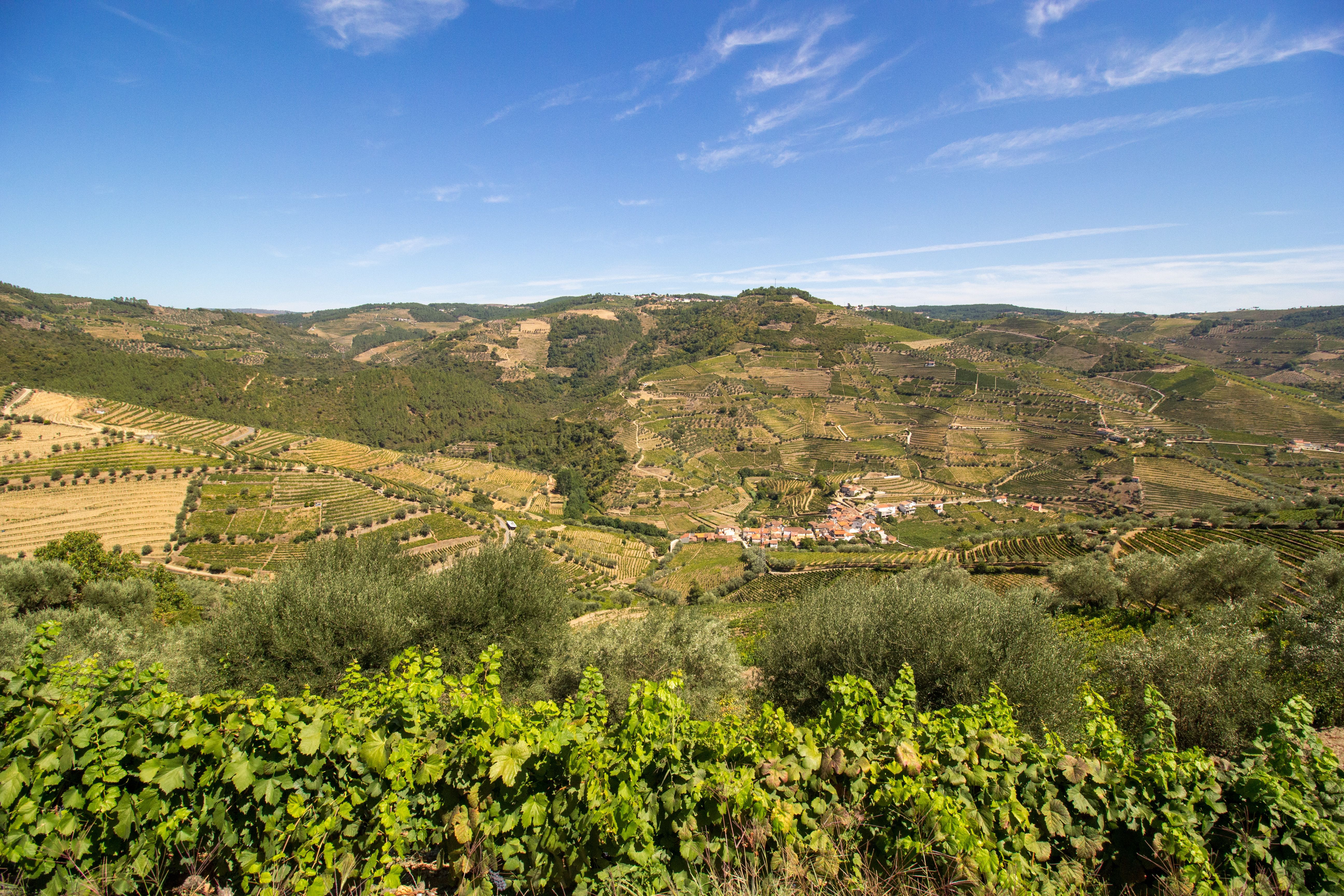
 

Leafy grapevines and olive trees frame a view across terraced hills in Portugal’s Douro Valley, with a small cluster of red-roofed houses below.
Vineyards, Douro Valley, Portugal

Pinhão

Pinhão, about 25 km upriver from Régua, sits in the heart of port country, surrounded by quintas. Its railway station is decorated with more than 3,000 azulejo tiles in 24 panels, installed in 1937, showing the harvest and the rabelo boats that once carried wine down to Gaia. Small boats offer one- or two-hour trips on the river, often with a glass of port.
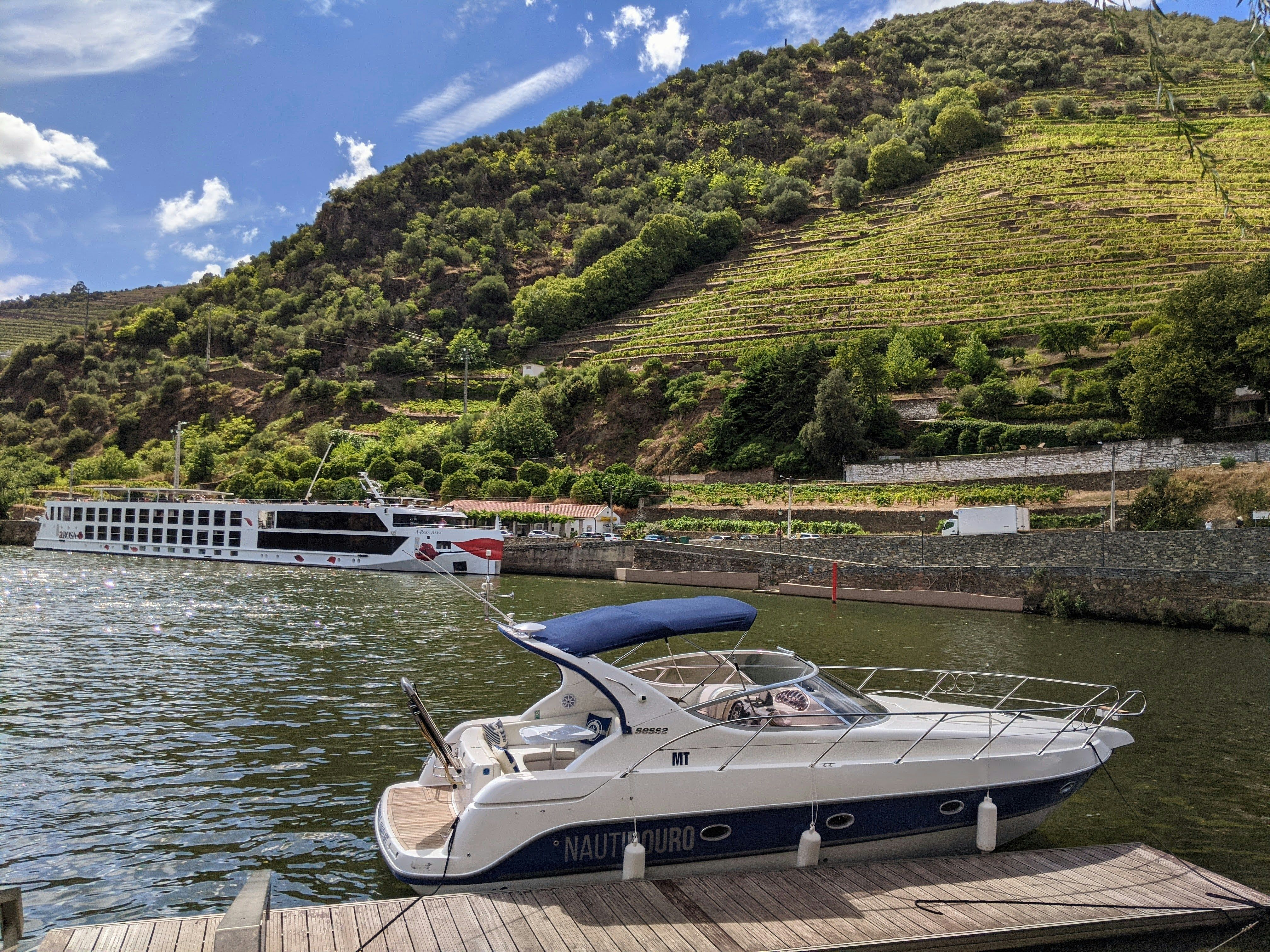
 

A motorboat with a blue canopy is moored beside a wooden pontoon on the Douro River in Portugal. A river cruise ship sits along the opposite bank beneath steep vineyard terraces.
Douro River, Douro Valley, Portugal

Lamego

South of Régua, Lamego is known for the hilltop sanctuary of Nossa Senhora dos Remédios.
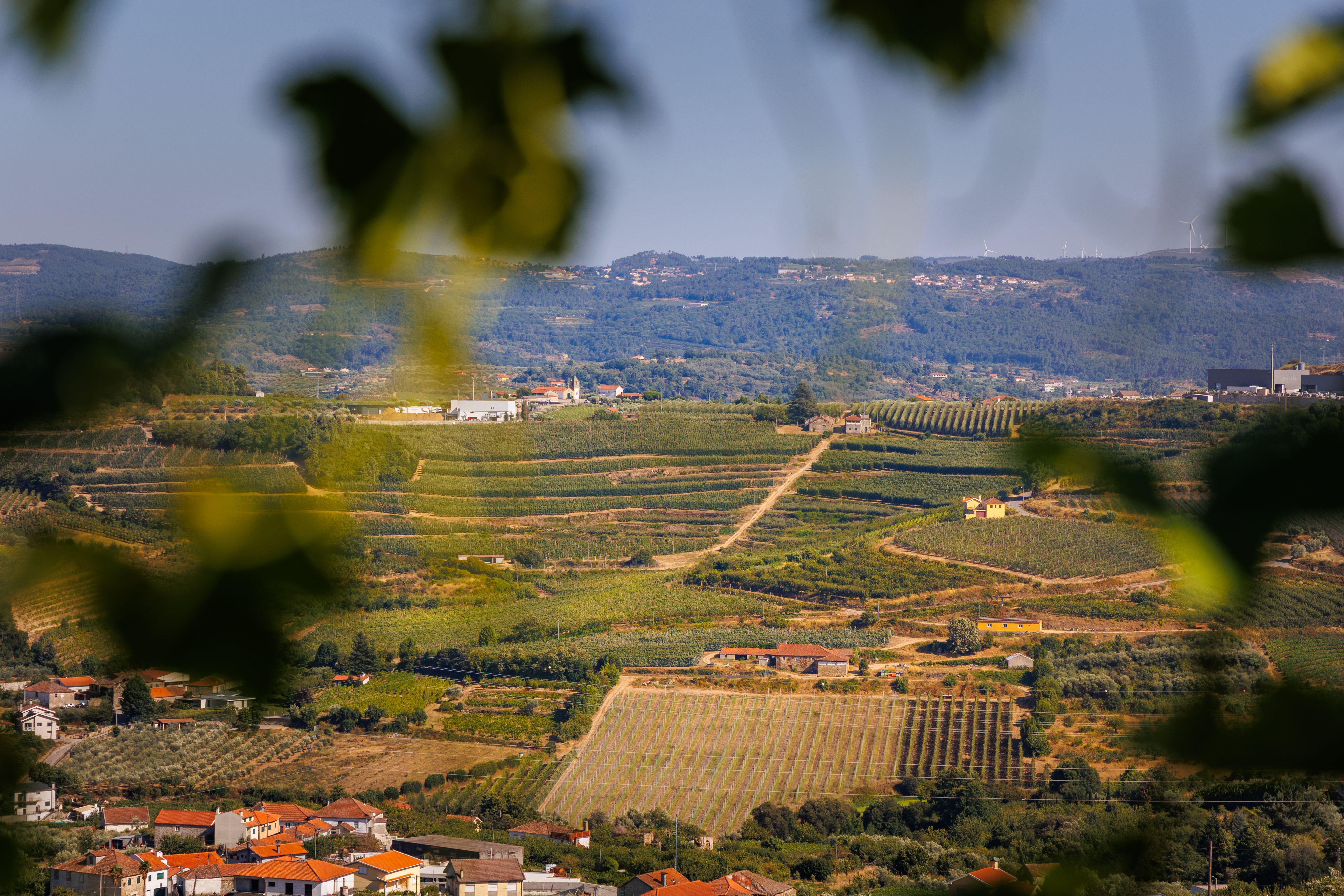
 

Out-of-focus leaves frame vineyards, farm tracks and scattered houses in Portugal’s Douro Valley. Wooded hills and distant wind turbines line the horizon.
Vineyards, Douro Valley, Portugal

Favaios

In the hills above Pinhão, Favaios is a wine village known for its Moscatel and its bread. At Quinta da Avessada, a full-day experience combines a classic car tour of the village, a visit to a traditional bakery and Moscatel tastings.
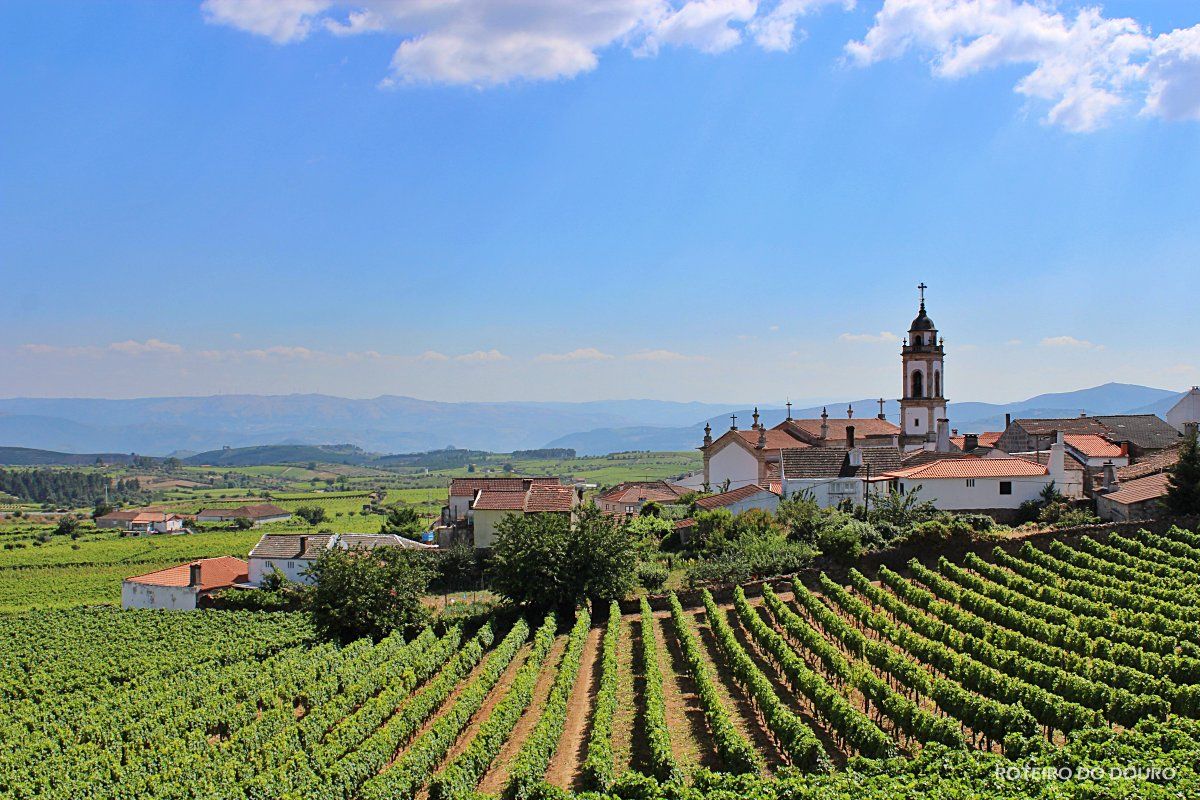
 

Rows of green grapevines lead towards whitewashed houses and a church bell tower in Favaios, Alijó, Portugal, with rolling countryside beyond.
Favaios, Alijó, Portugal | Photo by: Roteiro do Douro

🚗 FEEL FAVAIOS: FOOD AND WINE DAY

A day at Quinta da Avessada and the wine village of Favaios, with a classic car tour, the bread oven and Moscatel tastings.

See the activity →

Quintas to Visit in the Douro Valley

Many quintas (wine estates) welcome visitors for tours, tastings and meals with a view. Around Pinhão, Quinta do Bomfim, Quinta das Carvalhas and Quinta da Roêda, home of Croft, all offer port and wine tastings. Book visits in advance, especially on weekends and during the harvest, and plan no more than two or three quintas a day.


Two tasting glasses containing golden and deep red Port wine stand on a wooden barrel beside an open green-framed window in Portugal, with foliage visible outside.
Port Wine Tasting, Portugal

Remember that the famous port lodges you tour in the city, such as Taylor's, Sandeman and Graham's, are in Vila Nova de Gaia, across the river from Porto. The wine is made in the Douro and was traditionally shipped downriver to age in Gaia. Both are worth visiting.

Douro Wines

  • Port. The fortified wine that made the region famous, in styles from white and ruby to aged tawny and vintage.
  • Douro DOC. Unfortified reds, usually full-bodied, and increasingly fine whites.
  • Moscatel do Douro. A sweet fortified wine, made in villages such as Favaios.


Curving vineyard terraces and a winding track descend towards the Douro River in Portugal’s Douro Valley, with hillside buildings visible beyond the river bend.
Vineyards, Douro Valley, Portugal

Best Time to Visit

SeasonWhat to expect
SpringGreen vines, mild weather, fewer visitors
SummerHot in the valley, long days, busy quintas
September and OctoberThe harvest, golden light, the most popular time
Late autumnRed and yellow vineyards after the harvest
WinterQuiet, cold, bare vines and some reduced hours

Douro Trips from Porto

🍇 PORTO & DOURO VALLEY BY TRAIN

Porto and the Douro Valley in one trip, with the train along the river.

See the trip →

Plan it your way

Custom Your Trip

Tell our local travel advisors which towns, dates and experiences you want and we build the Douro trip around you, quintas included.

Start your custom trip →

Limited time

Portugal Packages On Sale

Flights, hotels and rental car bundled at reduced prices. See every package currently on sale and book while it lasts.

Book now →
A glass containing white wine rests on a stone ledge above Portugal’s Douro Valley, with the river and terraced vineyard slopes softly blurred behind it.
Wine Tasting, Douro Valley, Portugal

Frequently Asked Questions

How far is the Douro Valley from Porto?
Is the Douro Valley worth visiting?
Can you visit the Douro Valley as a day trip from Porto?
What is the Douro Valley known for?
When is the harvest in the Douro?

Keep Reading